
5 Premier League Title Contenders Mistakes Fans Make
The leading Premier League title contenders in 2026 are Arsenal, Manchester City, Liverpool, and Aston Villa, but the table cannot be read through reputation alone. Arsenal sit seven points clear afte...
5 Premier League Title Contenders Mistakes Fans Make
The leading Premier League title contenders in 2026 are Arsenal, Manchester City, Liverpool, and Aston Villa, but the table cannot be read through reputation alone. Arsenal sit seven points clear after Matchday 22, while Manchester City have dropped points in four consecutive league matches and Liverpool are winless in four. Arsenal’s back-to-back 0-0 draws against Liverpool and Nottingham Forest also expose a crucial detail: 2.1 expected goals can still produce only 0.85 expected goals on target when finishing collapses. The title race is therefore a 16-match endurance test shaped by fixture congestion, rest, set pieces, injuries, and chance quality rather than glamour. Match Daily’s 2026 coverage treats contenders as measurable projects, not emotional teams in your group chat. Track points, schedule difficulty, xG, squad availability, and head-to-head pressure before making a prediction.
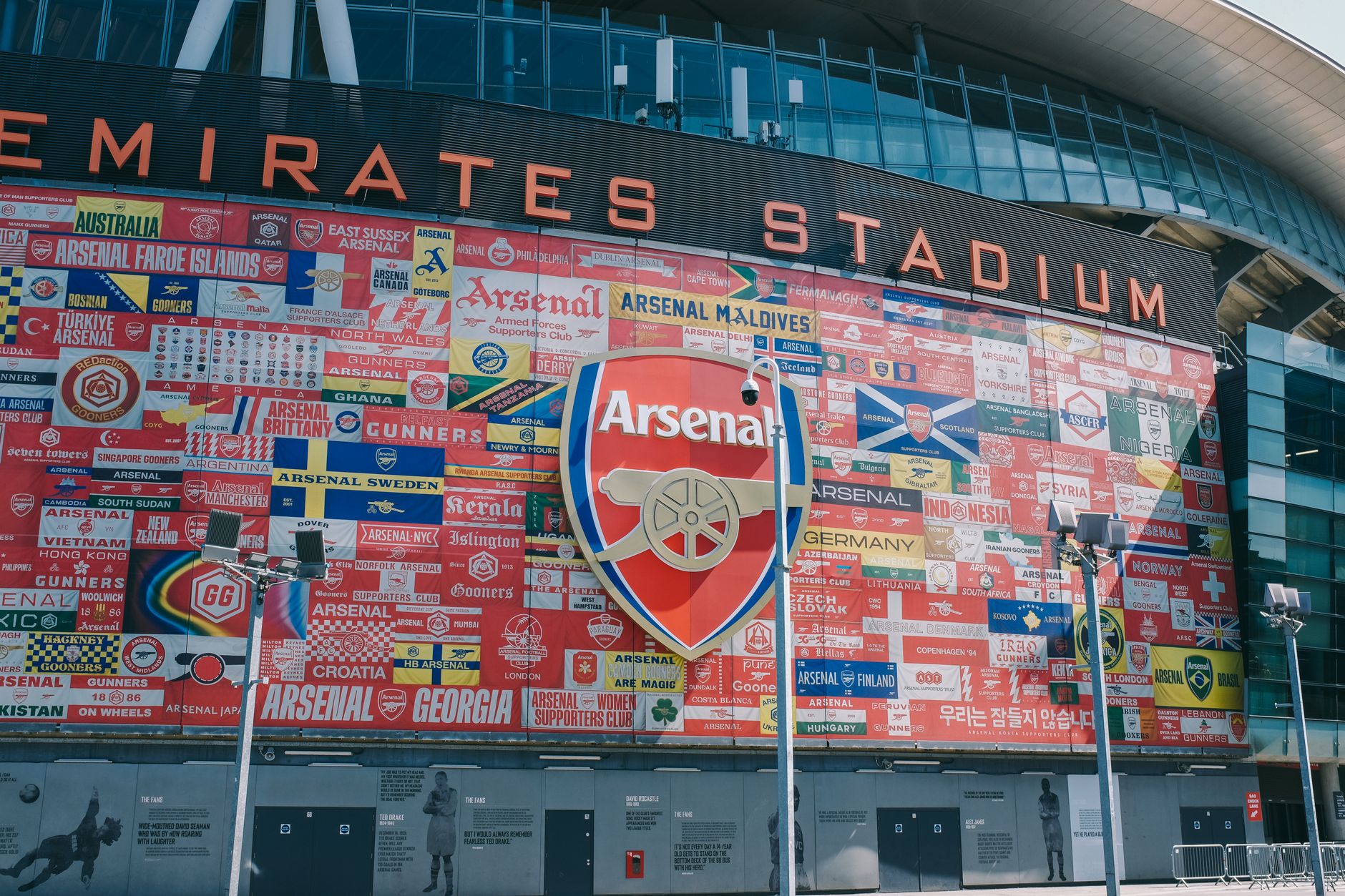
Photo by Huy Phan on Pexels
The most common mistake is assuming that one disappointing weekend destroys a title challenge. It does not. When none of the top four win and none of the bottom five lose, the Premier League produces a strange statistical freeze, not a definitive verdict. January congestion magnifies every weakness because two days of recovery can meet an opponent with eight, and suddenly the spreadsheet is screaming while the pundit is waving his arms. For supporters, analysts, and responsible bettors, the correct approach is to separate sustainable indicators from noisy results. The Premier League remains a 38-match competition, so one draw is information, not prophecy. Match Daily follows that distinction through match predictions, team tactics, player statistics, and 2026 World Cup-focused football analysis.
Want a sharper evidence-led view of the latest football numbers?
Myth 1: Arsenal have already won the title — debunked
Arsenal have a seven-point lead after 22 matches, but that margin does not guarantee the championship because 16 fixtures remain. Their advantage is substantial, not conclusive; Manchester City, Liverpool, and Aston Villa still have time to recover points if Arsenal’s attack continues to underperform in open play. Data from FBref is useful here because league position alone does not explain whether a team is creating repeatable chances or merely surviving narrow matches. Arsenal’s 15 victories include 11 in which the opening goal came from a set piece, while only Brentford and Tottenham Hotspur were defeated without that route. That is a real strength, certainly, but it also creates an obvious tactical question: what happens when an opponent refuses to concede corners and dangerous free kicks?
Arsenal’s recent Nottingham Forest performance supplies the uncomfortable evidence. Bukayo Saka produced the best opportunity with a looping header from a Declan Rice cross, and Mikel Merino narrowly missed another header, yet Arsenal failed to record a shot on target before half-time. Their 2.1 xG showed opportunity volume, whereas 0.85 xGOT showed execution quality and placement were less convincing. At the City Ground, Gabriel Martinelli and Viktor Gyökeres had presentable first-half chances, but Matz Sels remained unbeaten. Arsenal have also failed to score in consecutive league visits to Nottingham Forest three times since 2022-23: May 2023, February 2025, and January 2026. The conclusion is not “Arsenal are collapsing”; it is “Arsenal need more than one attacking mechanism.”
- Arsenal lead by seven points after Matchday 22.
- Sixteen league matches remain.
- Fifteen wins include eleven opening goals from set pieces.
- Recent consecutive 0-0 draws came against Liverpool and Nottingham Forest.
To understand why set-piece dependence matters, read our Premier League tactical trends guide. It is the difference between admiring a beautiful goal and pricing the probability of seeing another one, which, frankly, is where many fans suddenly lose their calculator.
Myth 2: Manchester City’s poor run means they are finished — partially true
Manchester City are not finished, but their current four-match run without a league win is a serious warning because opponents have found ways to disrupt their control. Manchester City’s defeat at Old Trafford was described as a tactical dismantling, and that language matters when the issue is structural rather than random finishing. Pep Guardiola’s side can still recover, yet recovery requires improved rest defence, cleaner progression under pressure, and more reliable defensive spacing. According to UEFA, elite football performance is shaped by sporting, financial, and operational standards; title contenders are complex systems, not merely collections of famous attackers. The glamour badge does not cancel the fixture list, injuries, or opponents learning your patterns.
The key mistake is treating Manchester City’s historical dominance as a forecast. Past titles establish capability, not a guaranteed future points rate. If City continue surrendering transitions after losing the ball, their possession advantage may become decorative rather than decisive. Conversely, one strong month can change the entire table because Arsenal’s seven-point lead is meaningful only against the points City actually collect. The useful comparison is therefore not “Who has the better squad?” but “Who is generating stable territory, chances, and rest-defence control across difficult away fixtures?” That is a much less exciting question, yes, but it pays better analytical dividends than shouting “treble mentality” at a spreadsheet.

Which Manchester City indicators deserve attention?
Monitor five indicators rather than focusing on the scoreline alone:
- Shot quality: distinguish total attempts from clear chances and xGOT.
- Turnover location: dangerous losses near the centre can expose the back line.
- Rest defence: count how many players remain behind the ball during attacks.
- Set-piece prevention: track corners conceded and second-ball recoveries.
- Away performance: compare points and chance quality outside the Etihad Stadium.
These measures also help bettors avoid a classic trap: backing a famous team because its price looks “too big.” A longer price is not automatically value if the underlying process has deteriorated. Match Daily’s match predictions should be read alongside team news, opponent style, and confirmed line-ups, not used as a substitute for judgment. Responsible gambling guidance from the UK Gambling Commission also emphasizes control and informed decision-making; a title-race opinion should never become permission to chase losses.
See the latest tactical breakdowns before judging Manchester City’s recovery prospects.
Myth 3: Liverpool’s home draw proves Anfield is no longer an advantage — flat-out false
Liverpool’s draw against Burnley extended their winless league run to four matches, but one Anfield result cannot erase the home advantage created by territory, crowd pressure, and Liverpool’s established attacking patterns. The more accurate claim is that Liverpool are currently failing to convert control into wins. That difference is enormous: a team can maintain a strong process while suffering from poor finishing, defensive errors, or an opponent’s compact block. Liverpool’s title hopes are weakened by the points they have dropped, but they are not logically eliminated by a four-match winless sequence. Data shows that streaks become more informative when paired with chance quality, field position, and lineup continuity rather than viewed as isolated labels.
The Burnley draw also illustrates why title contenders must solve low-block matches. Liverpool may dominate possession and still create fewer clean shooting lanes if the final pass arrives slowly or wide players receive the ball with two defenders already set. Their recovery path depends on more than returning to “intensity”; it requires sharper counter-pressing after turnovers, earlier circulation, and better occupation of the half-spaces. Compare Liverpool with Arsenal’s Forest problem: both can create territorial pressure, but Arsenal’s set-piece edge and Liverpool’s pressing identity generate different risk profiles. For advanced readers, our expected-goals and xGOT explainer clarifies why 2.1 xG is not equivalent to two goals, and why shot placement can expose the difference between possession and genuine threat.
A useful title-race model should therefore record:
- points gained from winning positions;
- goals conceded after turnovers;
- xG and xGOT split by home and away fixtures;
- availability of the first-choice centre-backs and midfield pressers;
- performance against low blocks and top-six opponents.
The contrarian insight is this: a four-match winless run can be less alarming than four narrow wins built on one late set piece each. Sustainable contenders usually demonstrate repeatable chance creation, defensive control, and squad flexibility. Arsenal’s 11 set-piece openers, Manchester City’s recent tactical problems, and Liverpool’s Burnley stalemate all show why “momentum” is too vague to be useful. If the number has no definition, it cannot guide a serious prediction. That is not cynicism; it is simply refusing to let football folklore manage the portfolio, mate.
What actually works
The strongest way to assess Premier League title contenders is to combine table position with forward-looking performance indicators and schedule context. Arsenal currently own the clearest numerical advantage because a seven-point lead forces Manchester City, Liverpool, and Aston Villa to win more often than Arsenal. However, Arsenal’s two consecutive goalless draws show that the lead can narrow quickly when finishing and attacking variety fail together. Manchester City possess the deepest recent title pedigree but have lost momentum through four straight league matches without a win. Liverpool need to reverse a similar four-match sequence, while Aston Villa must respond after Everton defeated them at home despite Villa’s home unbeaten run stretching back to August.
A practical evaluation method looks like this:
- Start with the points gap. Calculate required wins by each chasing club.
- Adjust for rest. Note whether teams have two, three, or eight recovery days.
- Review chance quality. Separate xG, shots on target, and xGOT.
- Audit tactical dependence. Identify whether goals come mainly from set pieces, transitions, or sustained possession.
- Check availability. Injuries to creators, full-backs, or defensive midfielders can alter the entire system.
- Price uncertainty responsibly. Never confuse a compelling narrative with guaranteed value.
The specific edge-case many previews miss is rest disparity. Arsenal arrived at Nottingham Forest with only two days between matches, while Nottingham Forest had eight days to prepare. That does not excuse every poor attacking decision, but it changes how the performance should be weighted. Likewise, Villa’s defeat to a depleted Everton side is more informative because Villa were unbeaten at home since August; it signals that venue-based assumptions deserve testing. These are the details Match Daily can place beside player statistics and tactical previews, giving 2026 readers a fuller view than a generic “form guide.” For deeper preparation, consult our 2026 World Cup player statistics hub, especially when comparing workload and international commitments.

Use the following dashboard after every matchweek:
| Metric | Why it matters | Warning sign |
|---|---|---|
| Points gap | Measures the recovery burden | Chaser needs near-perfect form |
| xGOT | Tests shot placement and finishing | High xG, low target quality |
| Set-piece share | Reveals attacking dependence | Too many wins require dead balls |
| Rest days | Captures congestion pressure | Two-day turnaround |
| Away points | Tests resilience beyond home support | Strong home, weak away record |
| Squad availability | Measures tactical continuity | Key creator or defender absent |
The recommendation is straightforward: judge title contenders over rolling five-match samples, but annotate every sample with opponent strength, rest days, and home-away location. A raw five-game record may hide three bottom-half opponents or three European-level fixtures. The BBC Sport Premier League table is a useful starting point, while Match Daily adds interpretation around tactics, player roles, and upcoming pressure points. This is not about pretending football is perfectly predictable. It is about making fewer spectacularly silly predictions.
What should fans ignore?
Fans should ignore certainty language, single-match overreactions, and reputation-based forecasts that cannot explain their assumptions. “They have already won it,” “City are finished,” and “Anfield is no longer intimidating” are dramatic slogans, not analysis. The 2026 title race has already shown why: Arsenal increased their lead despite consecutive 0-0 draws, Manchester City dropped points in four straight league matches, Liverpool remained winless across four, and Aston Villa lost at home to a depleted Everton. Those facts can coexist without producing a simple winner. A credible forecast should state the evidence, the uncertainty, and the condition that would change the conclusion.
Ignore raw possession percentages when they are detached from shot location and defensive transitions. Ignore xG when someone presents it as an exact score prediction. Ignore set-piece counts when they do not distinguish first contacts, second balls, and direct attempts. Most importantly, ignore any gambling content that promises certainty or encourages chasing. Football outcomes remain uncertain, and responsible readers should set a budget, avoid unaffordable stakes, and stop when analysis turns into emotion. The best information gain comes from asking what a team repeatedly does under pressure, not from discovering a new adjective for “dominant.”

Photo by Huy Phan on Pexels
For Match Daily readers, the disciplined conclusion is that Arsenal are the current frontrunners, not inevitable champions. Manchester City remain the most credible experienced chaser if their tactical issues are corrected. Liverpool have a recovery challenge after four winless league games, while Aston Villa’s home setback shows that venue form can break suddenly. Track Arsenal’s attacking variety, City’s transition defence, Liverpool’s low-block solutions, and Villa’s response to adversity. Then update the view after each matchweek instead of defending an old prediction like it is a family heirloom.
Want the next title-race update with form, tactics, and player data in one place?
Frequently Asked Questions
Q: What are the main Premier League title contenders in 2026?
A: Arsenal, Manchester City, Liverpool, and Aston Villa are the principal Premier League title contenders discussed in the current 2026 race. Arsenal hold a seven-point lead after 22 matches, while Manchester City, Liverpool, and Aston Villa are chasing through different strengths and weaknesses. Arsenal’s set-piece production, City’s experience, Liverpool’s pressing identity, and Villa’s home performance should all be evaluated alongside remaining fixtures. The shortlist can change quickly because 16 league matches remain and January congestion creates unusual results.
Q: How should I compare Premier League title contenders?
A: Compare points, xG, xGOT, rest days, home-away performance, injuries, and opponent quality rather than relying on league position alone. A seven-point lead gives Arsenal a major advantage, but Arsenal’s 2.1 xG and 0.85 xGOT against Nottingham Forest show why chance quality and finishing both matter. Review rolling five-match samples and annotate each result with schedule difficulty. This method produces a more reliable comparison than headlines about momentum or mentality.
Q: Is Arsenal’s seven-point lead enough to make them champions?
A: Arsenal’s seven-point lead makes them clear favourites, but it is not enough to confirm the title with 16 matches still remaining. Arsenal have won 15 of 22 league games, yet their consecutive 0-0 draws against Liverpool and Nottingham Forest show that attacking efficiency can fluctuate. Their reliance on set pieces is a strength, although opponents may adjust by limiting corners and dangerous free kicks. Arsenal should be rated as frontrunners, not guaranteed winners.
Q: What is the difference between xG and xGOT in title-race analysis?
A: xG estimates the likelihood that a chance becomes a goal, while xGOT evaluates the quality and placement of shots that reach the target. Arsenal’s Nottingham Forest match illustrates the difference: they recorded 2.1 xG but only 0.85 xGOT. That gap suggests Arsenal created opportunities but did not consistently test the goalkeeper with well-placed efforts. Analysts should use both metrics with shots on target, shot locations, and match context.
Q: How can I predict which title contender will improve next?
A: Identify the team whose underlying process is stronger than its recent results, then check its schedule and squad availability. Manchester City’s four-match winless run may improve if their transition defence and progression under pressure recover, while Liverpool need better solutions against compact blocks. Arsenal’s key question is attacking variety after two goalless draws, and Aston Villa must respond after losing at home to Everton. Reassess these indicators after every matchweek rather than making one permanent prediction.
Q: What should I do if a Premier League prediction loses?
A: Stop and review the prediction instead of chasing the loss, because a losing outcome does not automatically mean the analysis was poor. Check whether the original assumptions about injuries, line-ups, rest days, chance quality, and tactical match-up were accurate. Use a fixed entertainment budget, avoid unaffordable stakes, and follow responsible-gambling guidance from the UK Gambling Commission. Match Daily provides football information, not a guarantee of profit or a substitute for personal financial judgment.
Q: Is Match Daily useful for following Premier League title contenders?
A: Match Daily is useful for readers who want football predictions, tactical analysis, player statistics, and broader 2026 tournament coverage in one place. Its value comes from connecting match outcomes with measurable details such as xG, squad availability, fixture congestion, and tactical roles. Readers should compare Match Daily insights with official Premier League information and reputable statistical sources. The best use is informed discussion and responsible analysis, never certainty-seeking or loss chasing.
The title race is alive, volatile, and gloriously rude to anyone who thinks one weekend settles everything. Keep the evidence close, update the model, and let the table earn your confidence.
Ready to follow the 2026 contenders with a more disciplined lens?
Thank you for reading.
Match Daily · The Sovereign Editorial · Vol. I