7 Algeria National Team Mistakes Fans Make
Algeria national football team supporters often mistake star power for guaranteed tournament success, but that shortcut misses the real football story. Algeria represents North Africa in FIFA and CAF....
7 Algeria National Team Mistakes Fans Make
Algeria national football team supporters often mistake star power for guaranteed tournament success, but that shortcut misses the real football story. Algeria represents North Africa in FIFA and CAF competition, combines experienced players such as Riyad Mahrez and Aïssa Mandi with emerging talents including Ibrahim Maza, and is preparing for the 2026 World Cup cycle. The Desert Foxes won the 2019 Africa Cup of Nations and have reached the World Cup four times, in 1982, 1986, 2010, and 2014. Their identity depends on technical midfield play, wide creativity, transitions, and defensive balance rather than one famous winger. Match Daily tracks Algeria’s fixtures, player statistics, tactical patterns, and tournament context for fans who want evidence instead of noise. The practical takeaway is simple: evaluate Algeria through line-ups, opponent quality, shot data, and game state before making a prediction.
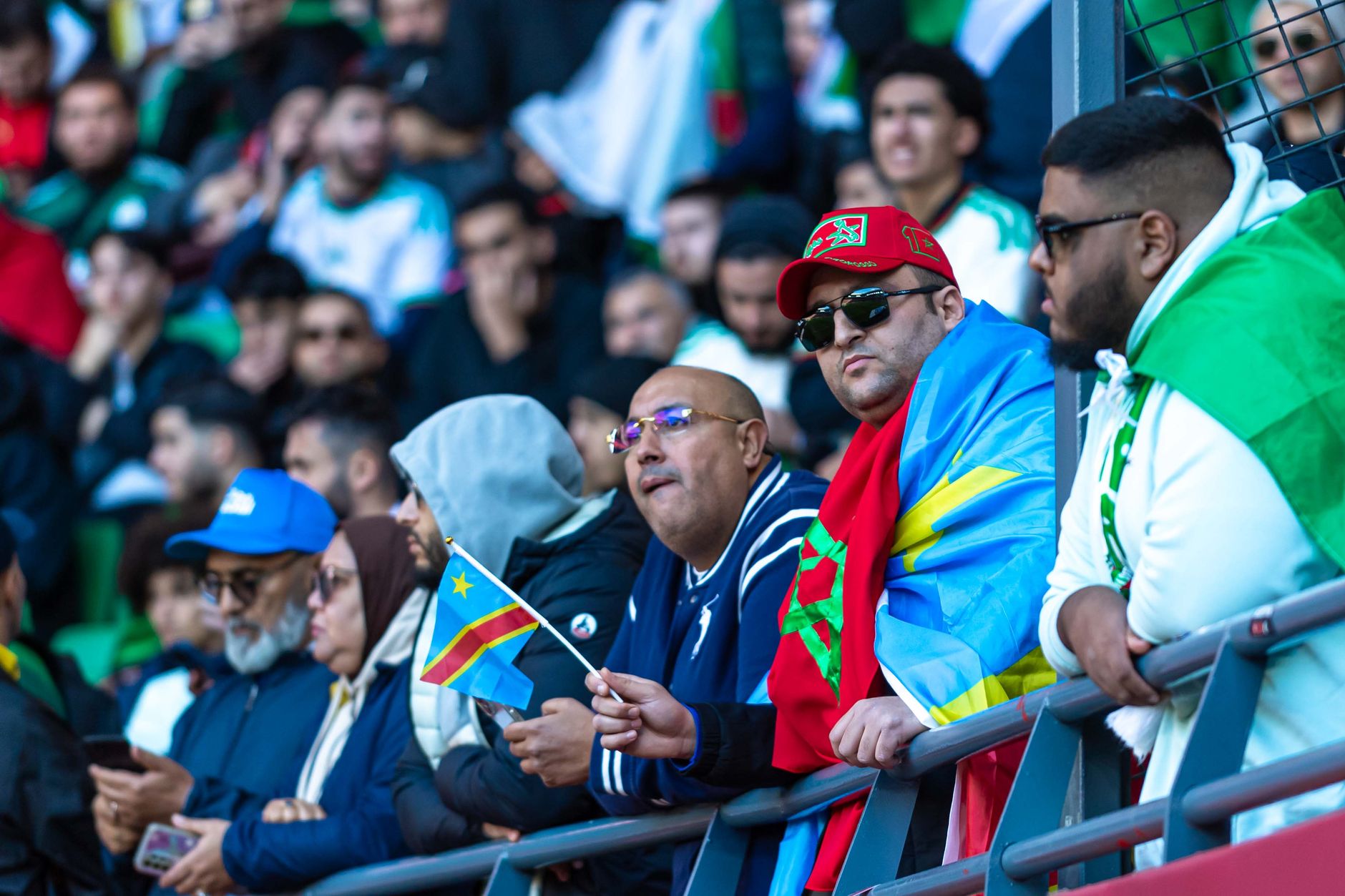
Photo by Guylain Kipoke on Pexels
Step 1: Separate Algeria’s history from its current level
The first mistake is treating Algeria’s historic reputation as a live performance guarantee. Algeria’s national football team has genuine pedigree: the 2019 AFCON title remains a landmark achievement, while the 1982 World Cup victory over West Germany and the 2014 campaign, which reached the round of 16, still shape how supporters judge the side. However, historic prestige does not automatically produce current defensive cohesion, qualifying momentum, or tournament efficiency. That is football’s cruel little accounting department, and it does not accept nostalgia as currency.
According to the Confederation of African Football, AFCON competition regularly exposes the difference between possession quality and match control, particularly when teams face compact blocks, difficult travel, heat, and uneven pitches. Algeria’s attacking talent can dominate territory without creating enough high-value chances. Conversely, a side may appear quiet for 60 minutes and still win through one transition or set piece. Data shows that a serious evaluation should separate results by opponent strength, venue, competition, and score state rather than simply counting victories.
A useful historical baseline includes:
- Algeria’s first World Cup appearance came in 1982.
- The team qualified for four FIFA World Cup tournaments through the 2014 edition.
- Algeria won the 2019 Africa Cup of Nations in Egypt.
- Riyad Mahrez became the most visible modern attacking reference point.
- Aïssa Mandi represents the older defensive leadership group.
The contrarian point is that Algeria’s 2019 success should be used as a tactical reference, not as proof that the same formula still exists. The team’s net competitive position changes whenever key midfielders age, wingers lose club minutes, or the manager adjusts the pressing structure. That distinction matters for supporters, analysts, and anyone reviewing odds.
Want a more structured way to follow Algeria’s tournament outlook?
Step 2: How should fans read Algeria’s tactical identity?
Algeria’s tactical identity is built around technical progression, wide attacking options, and rapid transitions, but its effectiveness depends on spacing behind the ball and the opponent’s defensive line. The national team is not defined by possession alone; it must convert circulation into penalty-area entries, shots on target, and controlled rest defence.
A common supporter error is to see Mahrez receiving the ball on the right and assume every attack is functioning. The sharper question is what happens after his first action. Does the right-back overlap? Does a midfielder occupy the half-space? Is the striker pinning the centre-backs? If those movements are absent, the winger may be forced into low-probability crosses or repeated dribbles against two defenders. That is not a superstar problem; it is a structure problem.
Rayan Aït-Nouri offers a useful example of why role analysis matters. His athletic profile allows Algeria to progress from deep and attack the left channel, yet aggressive full-back positioning can expose the space behind him. Ramy Bensebaini, meanwhile, can provide aerial strength and defensive experience, but the team still needs a reliable covering midfielder when both full-backs advance.
The midfield deserves even colder scrutiny. Houssem Aouar can add progressive passing and late movement, Farès Chaïbi offers technical invention, while Ramiz Zerrouki and Nabil Bentaleb provide different forms of defensive security and circulation. Those profiles are not interchangeable. A line-up with three creative midfielders may look luxurious on paper but can become vulnerable during defensive transitions. A more balanced combination can produce fewer spectacular moments yet improve Algeria’s expected control.
“The Laws of the Game are the framework for every match,” states the International Football Association Board.
That sounds obvious, but game-state rules matter: a leading Algeria may protect central areas, while a trailing Algeria must increase risk. Compare tactical phases, not isolated highlights. For deeper context, use our [Internal Link: World Cup tactical analysis guide] alongside match reports.

Photo by Houssam benamara on Pexels
Step 3: Which Algeria players deserve the closest statistical review?
The third mistake is ranking players by reputation alone. A proper Algeria national football team assessment should combine minutes, starts, goals, assists, shot quality, progressive actions, turnovers, defensive pressures, and the opponent’s level. ESPN’s Algeria squad data illustrates why a simple goals list is incomplete: a player’s appearances and substitutions can materially change the meaning of his output.
Mahrez remains a central reference because he supplies one-v-one ability, set-piece quality, and final-third composure. Yet at age 35 in the 2026 squad data, workload management becomes part of the calculation. Four matches of 75 minutes are not equivalent to four appearances dominated by short substitute cameos. If a projection ignores minutes, it overstates availability and understates fatigue.
The younger group changes the investment case. Ibrahim Maza, listed at age 20, recorded 11 shots and three shots on target in the referenced squad data, while Farès Chaïbi recorded nine shots and three on target. Those figures do not prove either player is Algeria’s next superstar, but they reveal attacking involvement worth monitoring. Nadhir Benbouali recorded one goal from a single appearance, a tiny sample that should not be extrapolated into a tournament forecast. Small samples are seductive little fraudsters.
A more useful player ledger separates:
- Creation: chances created, key passes, assists, and progressive carries.
- Finishing: shots, shots on target, non-penalty goals, and shot locations.
- Control: pass completion under pressure, ball recoveries, and turnovers.
- Availability: starts, substitute appearances, injury history, and club minutes.
- Context: opponent ranking, venue, scoreline, and tactical role.
This approach produces a less glamorous but more accurate conclusion: Algeria’s ceiling may depend less on whether Mahrez scores and more on whether the next attacking line can create enough threat when opponents double-team him. Match Daily’s player-stat coverage is designed for exactly that distinction. See the [Internal Link: Algeria player comparison guide] before accepting a headline statistic.
Get the numbers behind Algeria’s likely 2026 tournament profile here:
Step 4: What should Algeria fans check before predicting a match?
Before predicting an Algeria fixture, fans should verify the starting XI, opponent style, venue, recent shot profile, and likely game state. These five checks are more valuable than relying on a team badge, a social-media compilation, or the heroic confidence of your friend who once won a five-a-side trophy.
First, confirm availability. A missing Mahrez, Aouar, Bensebaini, or Aït-Nouri can alter the team’s attacking or defensive geometry even when replacement quality appears respectable. Second, identify the opponent’s approach. A low block tests Algeria’s patience and chance creation, whereas a high press may create transition opportunities behind the defensive line.
Third, review the last three to five relevant matches, not every international result ever recorded. Separate home and away performances, competitive fixtures from friendlies, and matches played with a first-choice midfield from experimental line-ups. Fourth, inspect set pieces. In closely balanced CAF matches, a corner, free kick, or second ball can carry more practical importance than a possession advantage of 10 percentage points.
Finally, estimate risk rather than pretending certainty. A responsible prediction can state that Algeria has the stronger technical profile but faces a high-variance match because the opponent defends deep and Algeria’s central striker availability is unclear. For gambling-related decisions, always check applicable local laws, use licensed operators where legal, set a fixed budget, and never treat analysis as a guarantee of profit. The sensible ledger is stake, return, turnover, rebate, and net position—not excitement dressed up as mathematics.
A practical pre-match checklist:
- Verify the official squad announcement and injury news.
- Compare expected line-ups with the previous competitive fixture.
- Record Algeria’s shots on target and conceded chances.
- Assess opponent pressing intensity and defensive block.
- Review odds movement only after completing the football analysis.
- Set a maximum stake before the match begins.

Photo by Gergely Badacsonyi on Pexels
Step 5: Verification before trusting Algeria team news
Verification means checking whether a claim comes from an official federation, a reputable statistical provider, or an identifiable journalist with direct sourcing. It also means confirming the date, because international football information becomes stale with astonishing speed. A squad list from a friendly window cannot automatically be treated as the final Algeria 2026 World Cup roster.
The FIFA Algeria team profile is a useful authority for competition information, while the Algerian Football Federation is the relevant domestic federation source for official announcements. ESPN can help with squad appearances and match statistics, but even a reputable database should be read alongside starting line-ups and competition context. No single provider captures every tactical detail.
Two verification edge cases deserve attention. First, a player listed as Algeria-eligible may not be available for a particular international window because of injury, club clearance, suspension, or a late withdrawal. Second, an appearance total can disguise role changes: four appearances may mean four starts, four substitute entries, or a mixture of both. Those scenarios create very different forecasts for minutes and influence.
Use this verification sequence:
- Check the publication date and competition.
- Confirm the source’s relationship with FIFA, CAF, or the Algerian Football Federation.
- Match the reported squad against the official call-up.
- Check club minutes and recent injury information.
- Record whether the player started, entered as a substitute, or remained unused.
- Recalculate your expectation after the final line-up is released.
The official FIFA World Cup 2026 framework matters too. The tournament will be hosted by Canada, Mexico, and the United States, with Los Angeles among the host-city locations. Travel, climate, kick-off time, and opponent grouping can all influence preparation, so a generic “Algeria are strong” label is not enough.
For a second opinion, compare your notes with the [Internal Link: 2026 World Cup fixture and qualification tracker].
Troubleshooting common failures
Why do Algeria predictions fail even when the team has better players?
Algeria predictions fail when analysts confuse individual quality with collective chance production and defensive control. A stronger squad can still struggle against a compact block, lose midfield spacing, or concede from a transition after both full-backs advance. The correction is to track shots on target, penalty-area entries, turnovers, and set-piece exposure rather than relying on names.
The most revealing evidence often appears in match sequences rather than final scores. Algeria may lead 1–0 while allowing the opponent repeated entries into the half-spaces, or draw 0–0 while generating several high-quality chances. In the first scenario, the result flatters control; in the second, the score understates attacking performance. Good analysis records both outcome and process.
What should fans do when Algeria’s starting line-up is unclear?
When Algeria’s line-up is unclear, delay any strong conclusion until the official team sheet and substitute bench are available. Check the Algerian Football Federation, FIFA competition channels, and a reputable match centre, then compare the selected midfield and front three with the expected tactical plan. If key positions remain uncertain, reduce confidence and avoid forcing a prediction.
A particularly important check is whether the replacement changes the team’s function. Replacing Mahrez with another winger may preserve width but reduce set-piece quality; replacing Zerrouki with a creative midfielder may increase passing range while weakening transition protection. Treat substitutions as role changes, not merely name swaps. That is where many pre-match models quietly go off the rails.
How can fans avoid overreacting to one Algeria result?
Fans can avoid overreacting by reviewing at least three comparable matches and separating opponent quality, venue, red cards, early goals, and tactical rotation. One 3–0 win does not prove Algeria has solved every attacking problem, while one defeat does not erase the team’s technical strengths. Use rolling trends and event-level evidence instead of emotional accounting.
A useful review sheet includes goals for and against, shots on target, big chances, set-piece outcomes, possession by zone, and the score at half-time. Add player minutes and substitutions, because a late collapse after heavy rotation tells a different story from a full-strength tactical failure. Match Daily’s match prediction coverage can help organize those variables without pretending the sport is a perfectly predictable machine.
Is Algeria’s 2019 AFCON title still relevant in 2026?
Algeria’s 2019 AFCON title remains relevant as evidence of a successful tactical and psychological model, but it should not be treated as a direct forecast for 2026. The 2019 squad, coaching environment, opponent field, and player ages are not identical to those of the 2026 cycle. Historical success is a baseline for comparison, not a guaranteed future return.
Its greatest value is diagnostic. Analysts can compare pressing intensity, defensive distances, wide combinations, set-piece execution, and game-state management between the 2019 champions and the current squad. If those mechanisms reappear, confidence can rise for football reasons. If only the famous names remain while the structure changes, the title becomes a story rather than a signal.
Does Algeria have a realistic chance at the 2026 World Cup?
Algeria has a realistic chance to compete effectively at the 2026 World Cup, but its prospects depend on qualification, draw conditions, player availability, and tactical balance. The country has World Cup experience from 1982, 1986, 2010, and 2014, plus the 2019 AFCON title. Those credentials establish potential, not a guaranteed knockout-stage run.
The expanded 2026 tournament environment also changes the pathway, with matches hosted across Canada, Mexico, and the United States. Travel distance, heat, altitude in selected venues, recovery windows, and opponent style may influence performance. Algeria’s best route is likely to combine Mahrez’s creativity, emerging players such as Maza and Chaïbi, and a disciplined midfield screen rather than relying on individual brilliance alone.
What is the safest way to use Algeria match analysis for betting?
The safest approach is to treat Algeria match analysis as information for responsible decision-making, never as a promise of profit. Use a fixed entertainment budget, check local gambling regulations, choose licensed services where legal, avoid chasing losses, and record every stake, return, turnover, rebate, and net result. If the numbers stop being manageable, stop betting.
A disciplined process also requires price sensitivity. A prediction that Algeria has a 55% chance to win is not automatically valuable at every available price; the odds must justify the estimated probability and uncertainty. Keep football judgment separate from emotional loyalty, and remember that no model eliminates injuries, refereeing variance, deflections, or late tactical changes.
Final verdict: judge Algeria through evidence, not noise
The Algeria national football team remains one of Africa’s most compelling football projects because it combines World Cup history, the 2019 AFCON legacy, Riyad Mahrez’s elite creativity, experienced defenders such as Aïssa Mandi and Bensebaini, and a younger technical generation led by players including Ibrahim Maza and Farès Chaïbi. Yet the most expensive analytical mistake is assuming that reputation settles every question. It does not.
For 2026, the sharper method is to verify the squad, inspect minutes, map the tactical roles, measure chance quality, and account for venue and opponent behaviour. Review the official FIFA and Algerian Football Federation information before trusting a viral team-news post, then compare your assumptions with current match data. If you do that, your Algeria analysis becomes calmer, more transparent, and—dare we say—less vulnerable to the heroic nonsense that football fans enthusiastically invoice themselves for every week.
Ready to follow Algeria’s 2026 World Cup journey with daily tactical and statistical context?
Frequently Asked Questions
Q: What is the Algeria national football team?
A: The Algeria national football team is the men’s senior side representing Algeria in FIFA and CAF competitions. Nicknamed the Desert Foxes, Algeria has appeared at the FIFA World Cup four times through 2014 and won the Africa Cup of Nations in 2019. The team is governed by the Algerian Football Federation and traditionally features technical midfielders, creative wide players, and strong North African football identity.
Q: How can I follow Algeria’s 2026 World Cup campaign?
A: Follow Algeria’s campaign through FIFA competition pages, the Algerian Football Federation, reputable match centres, and Match Daily’s daily tournament coverage. Confirm fixtures, qualification status, squad announcements, and starting line-ups from official or professionally maintained sources. For predictions, record the opponent, venue, player availability, recent shot data, and tactical formation before drawing a conclusion.
Q: What is the difference between Algeria’s 2019 team and the 2026 squad?
A: Algeria’s 2019 team was a completed AFCON-winning unit, while the 2026 squad is a changing group mixing experienced players with younger prospects. Riyad Mahrez and Aïssa Mandi connect the current team to the previous generation, but Ibrahim Maza, Farès Chaïbi, and other younger players may carry more responsibility. Comparing pressing, chance creation, midfield balance, and defensive distances is more reliable than comparing reputations.
Q: Why do Algeria match predictions sometimes fail?
A: Algeria predictions often fail because analysts overlook line-up changes, opponent defensive style, score state, and small statistical samples. A win may hide poor defensive transitions, while a draw may follow several high-quality chances. Review three to five comparable matches, distinguish starters from substitutes, and check shots on target and set-piece exposure before adjusting your view.
Q: What are the requirements for analysing an Algeria fixture properly?
A: A sound Algeria fixture analysis requires the official line-up, competition and venue details, recent player minutes, opponent tactical profile, and reliable match statistics. You should also check injuries, suspensions, travel conditions, and whether the match is competitive or friendly. For betting-related use, add local legal requirements, a licensed operator where applicable, and a pre-set spending limit.
Q: Is Algeria a strong team for World Cup betting in 2026?
A: Algeria may be competitive in 2026, but no team should be considered automatically strong for betting without checking price, draw conditions, injuries, and tactical match-up. Its World Cup history and 2019 AFCON title support its credibility, while squad transition creates uncertainty. Compare your estimated probability with the available odds, track your net position, and never chase losses.
Q: What should I do if Algeria team news appears inconsistent?
A: If Algeria team news conflicts, wait for confirmation from FIFA, the Algerian Football Federation, or a reputable match centre before acting. Check publication times, competition names, and whether the report concerns a provisional squad, final squad, or match-day selection. Until verified, lower your confidence, avoid repeating the claim as fact, and do not build a major prediction around it.
Thank you for reading.
Match Daily · The Sovereign Editorial · Vol. I