
Before You Train, Read This Football Skills Breakdown
Football improvement does not come from simply training harder; it comes from repeating the right actions under realistic pressure, then measuring whether they transfer into matches. For beginners, yo...
Before You Train, Read This Football Skills Breakdown
Football improvement does not come from simply training harder; it comes from repeating the right actions under realistic pressure, then measuring whether they transfer into matches. For beginners, youth players, and competitive adults, the most reliable method combines technical work, decision-making, athletic development, and structured feedback. A useful starting target is 20–30 minutes of ball work, three to five times weekly, followed by small-sided games or position-specific practice. The Football Association and FIFA both emphasise technique, perception, and game context rather than isolated fitness alone. Lionel Messi’s famous consistency is inspirational, but copying a professional’s five-hour routine would be a magnificent way to injure yourself before Tuesday. Use a 70:20:10 training split: approximately 70% technical repetition, 20% game-realistic practice, and 10% testing. Record baseline results for passing, dribbling, first touch, and shooting, then retest after four weeks. Track quality, not just effort, and make one weakness your primary project.
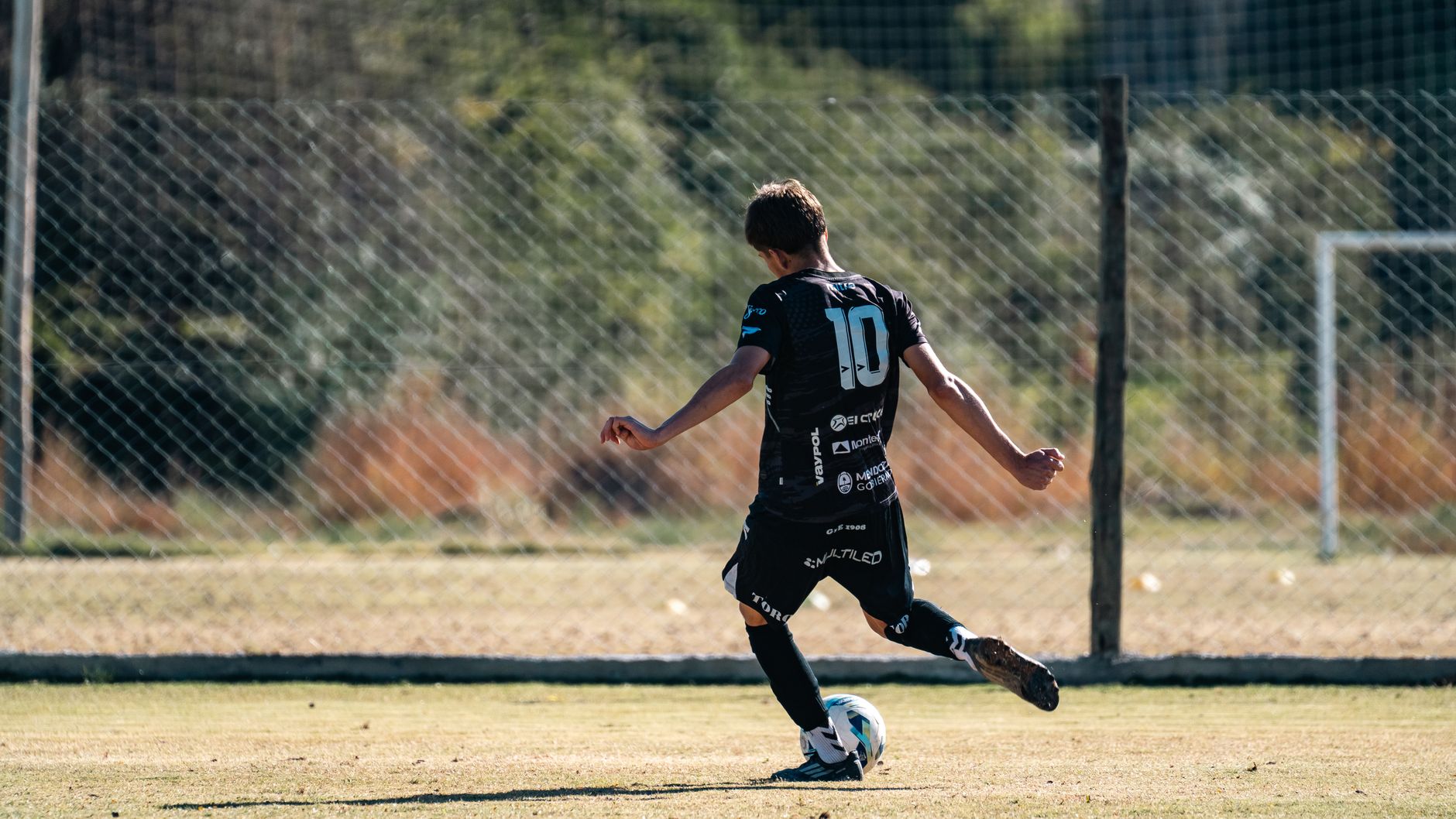
Photo by Franco Monsalvo on Pexels
Step 1: Diagnose Your Weakest Football Skill
Begin by identifying the match action that costs you the most possession, territory, or scoring opportunities. Review 15–20 minutes of match footage, ask a coach to observe one game, or write down every failed action immediately after playing. A midfielder might discover that the problem is not passing power but receiving with the wrong body shape; a winger may find that poor scanning prevents successful dribbles; a striker may be reaching shooting positions but taking an unnecessary second touch. This distinction matters because random practice creates the comforting illusion of progress while your actual weakness remains untouched, sitting there like an unpaid bill. According to FIFA’s Training Centre, effective development connects technical execution with perception and decision-making. Build a simple diagnostic table with the action, error, pressure level, foot used, and match consequence. Then choose one primary skill and one supporting skill for the next four weeks, rather than attempting to become Kevin De Bruyne, Virgil van Dijk, and Bukayo Saka before dinner.
Use this audit:
- Count misplaced passes, poor first touches, unsuccessful take-ons, and shots off target.
- Separate unpressured mistakes from errors made under defensive pressure.
- Note whether your weaker foot, body orientation, speed, or decision timing caused the problem.
- Select a measurable target, such as 8 successful weak-foot passes out of 10.
For a more detailed framework, review our [Internal Link: football match analysis guide] before designing your sessions.
Step 2: Build a Technical Routine That Survives Pressure
A technical routine improves football skills when it progresses from controlled repetition to movement, opposition, and time pressure. Spend the first five minutes on gentle touches with both feet, then use 10 minutes for passing and receiving, 10 minutes for dribbling, and 5–10 minutes for finishing or crossing. The important variable is not how many cones you own; it is whether the drill forces you to look up, change direction, and execute the next action quickly. Research published through The American College of Sports Medicine supports progressive overload and recovery as foundations of physical adaptation, and the same principle applies to football technique. Begin at a speed where you can complete roughly 80–90% of repetitions cleanly, then increase speed or pressure. If accuracy collapses below 70%, reduce complexity. Training at full speed with a technically broken movement pattern is not elite; it is merely expensive chaos.
Passing and first-touch drill
Use a wall, rebounder, or partner 8–12 metres away. Pass with the right foot, receive across your body with the left, scan over one shoulder before the ball arrives, and play the next pass in two touches. Complete 3 sets of 20 passes, then repeat with one-touch play if your accuracy remains high. Add a coloured cone call from a partner to make the first touch travel toward a new direction. This small adjustment creates information-processing demand, which a perfectly symmetrical cone lane does not.
Dribbling and change-of-direction drill
Place five cones at irregular distances across a 12-metre area. Dribble using the inside, outside, sole, and laces, but accelerate for three metres after every change of direction. Complete six runs, alternating the starting foot. Progress by adding a passive defender, then an active defender whose objective is to force you toward a specific side. The aim is not circus tricks; it is protecting the ball while preserving a useful next action.
[Internal Link: first-touch drills for beginners]
Step 3: Add Game Realism, Speed, and Decision-Making
The fastest route to better football skills is not endless solo repetition; it is placing useful technique inside representative situations. A player who can complete 100 stationary passes may still lose the ball because they fail to scan before receiving, misunderstand teammate movement, or panic when an opponent closes from the blind side. Use 2v2, 3v3, rondos, and directional games to connect technique with perception. A 3v3 game on a 25-by-20-metre pitch, with four-second possession limits, encourages quick support angles and faster decisions. A neutral player can create numerical superiority, while small goals reward forward passing rather than sterile sideways circulation. The FIFA Training Centre describes game-based practice as a way to link technical and tactical behaviours; that is precisely why it exposes weaknesses more honestly than a collection of pretty drills. Track successful actions under pressure, not merely touches completed in isolation. The football is a brutally honest accountant, dear friend.
A practical weekly progression looks like this:
- Week 1: unopposed technique, 60–90 seconds per repetition block.
- Week 2: passive pressure and directional first touches.
- Week 3: active defenders, reduced space, and weaker-foot requirements.
- Week 4: competitive games with scoring rules linked to the target skill.
After approximately 30 sessions, compare your original error rate with your new match footage. One useful information-gain test is to count “second actions”: how often your first touch creates a successful pass, shot, dribble, or escape. Players frequently celebrate a clean first touch that leads nowhere; the second action reveals whether the touch was genuinely functional.
Ready to connect training with match intelligence? Match Daily follows FIFA World Cup 2026 tactics, player statistics, and team trends for fans who want more than noisy hot takes.
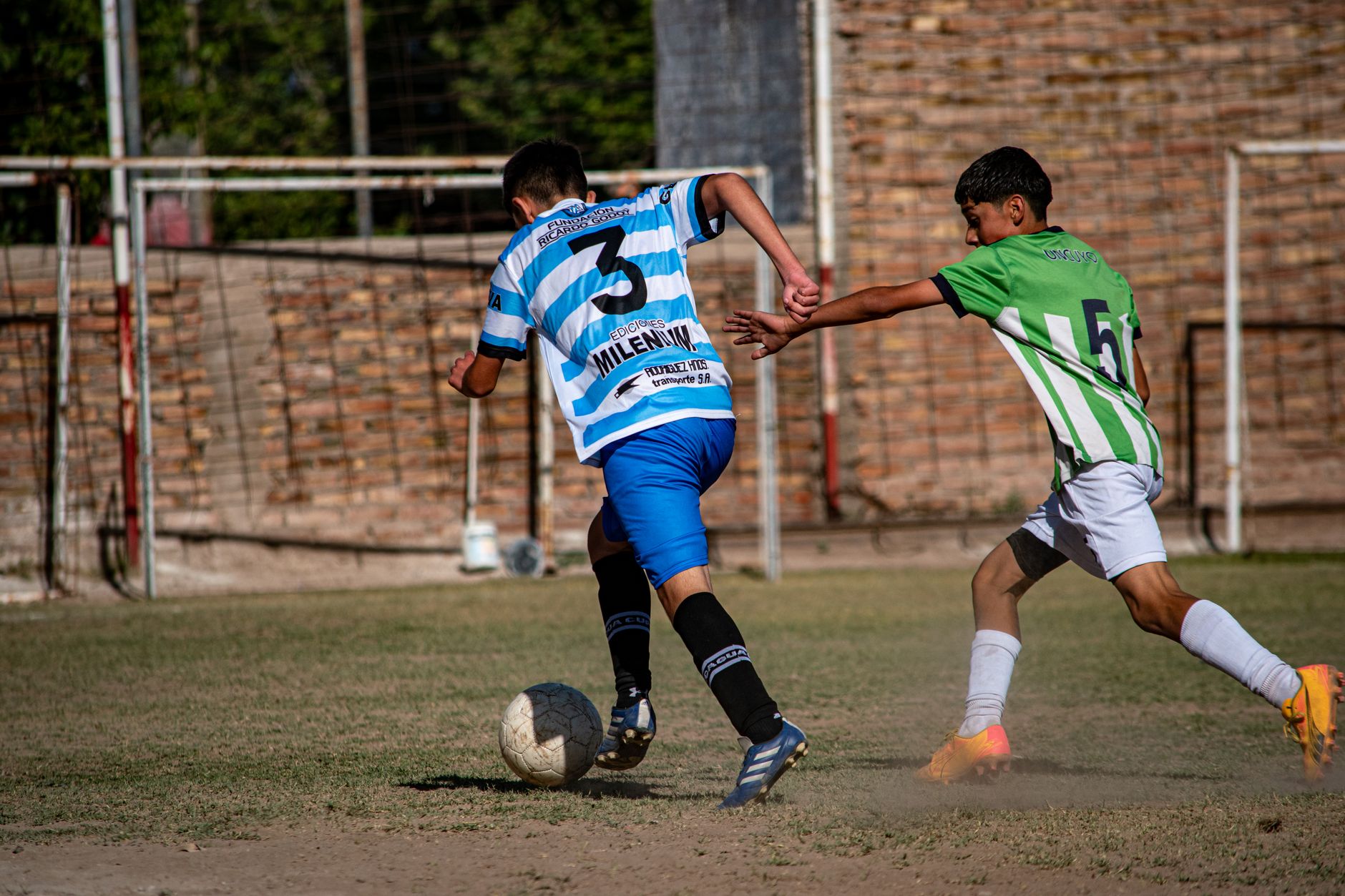
Photo by Franco Monsalvo on Pexels
Step 4: Improve Physical Qualities Without Losing Technique
Football fitness should support technical execution, not replace it. Acceleration, deceleration, balance, mobility, repeated sprint ability, and strength all influence whether you can perform a skill late in a match. Two weekly strength sessions can include split squats, calf raises, hamstring bridges, push-ups, rows, and anti-rotation core exercises, with two or three sets of 6–12 controlled repetitions. Add sprint work only after a thorough warm-up: six 10-metre accelerations, four 20-metre efforts, and full recovery between repetitions are more useful for many players than exhausting 400-metre runs. According to NHS physical activity guidance, gradual progression and recovery help reduce avoidable injury risk. FIFA’s injury-prevention research also highlights the value of structured warm-ups, including dynamic movement and neuromuscular preparation. The contrarian point is simple: if your final 20 minutes of training produce sloppy touches, stop calling that “extra work” and start calling it low-quality volume. Net improvement matters more than heroic exhaustion.
Use this 12-minute pre-session sequence:
- Three minutes of light jogging, skipping, and lateral movement.
- Three minutes of dynamic mobility for hips, ankles, and thoracic rotation.
- Three minutes of progressive accelerations at 50%, 70%, and 85%.
- Three minutes of ball touches, short passes, and controlled changes of direction.
Sleep, hydration, and nutrition also affect learning. Aim for consistent sleep, drink before thirst becomes aggressive, and consume a balanced meal containing carbohydrate and protein after demanding sessions. For additional context, see our [Internal Link: football recovery and conditioning guide].
Step 5: Verification — How Do You Know Your Football Skills Are Improving?
Improvement is verified when measurable training gains appear in match behaviour, not when a drill feels smoother. Test the same actions every four weeks under identical conditions: 50 wall passes per foot, 10 first-touch directional receptions, six timed cone runs, and 20 shots from defined zones. Record completion rate, time, weaker-foot percentage, and technical errors. Then review at least one competitive match and count whether the target action created an advantage. For example, if your first-touch accuracy rises from 62% to 82% but you still receive square to pressure, the technical number improved while the game skill did not. A complete verification system therefore uses three measures: controlled accuracy, pressured execution, and match transfer. Keep a written log with date, surface, footwear, fatigue level, and session duration, because retesting on wet grass after a night shift against a fresh baseline is statistical theatre. Data shows what happened; video helps explain why.
A useful scorecard includes:
- Technical accuracy: successful repetitions divided by total attempts.
- Decision speed: seconds from receiving to the next action.
- Pressure success: effective actions against an active opponent.
- Match transfer: target actions completed per 15 minutes.
- Physical cost: perceived exertion from 1 to 10.
The International Olympic Committee promotes evidence-informed athlete development, and that principle belongs in amateur football too. You do not need a laboratory, just consistent conditions and enough honesty not to award yourself bonus points for looking dramatic.

Photo by Thirdman on Pexels
Troubleshooting Common Failures
Most stalled football development comes from poor diagnosis, excessive variety, inconsistent scheduling, or training beyond recoverable quality. If a drill feels easy but matches remain difficult, add scanning, directional targets, a time limit, or an opponent. If your weak foot never improves, dedicate at least 30–40% of passing and finishing repetitions to it, but keep the distance and speed manageable. If your touch deteriorates after 20 minutes, shorten repetitions and insert 30–45 seconds of recovery rather than proudly collecting useless errors. When soreness persists, sprinting feels painful, or joint swelling appears, stop the relevant activity and seek qualified medical advice. “No pain, no gain” is not a training system; it is a slogan that has probably ruined enough hamstrings already.
Common fixes include:
- No progress after four weeks: change the constraint, not merely the drill name.
- Poor match transfer: practise with opponents and directional goals.
- Repeated ankle or hamstring discomfort: reduce sprint volume and consult a clinician.
- Low motivation: train with one partner and use a visible performance scorecard.
- Overtraining: schedule at least one full rest day and one low-intensity day weekly.
Do not confuse novelty with quality. Ten carefully selected drills repeated progressively will usually outperform 40 random drills performed once each. That is not glamorous, but neither is defending a corner properly, and both win matches.
A Four-Week Football Skills Plan
A realistic plan gives each session a purpose while protecting recovery. On Monday, complete 30 minutes of first touch and passing, followed by 15 minutes of mobility. On Wednesday, practise dribbling, acceleration, and 3v3 decision-making for approximately 60 minutes. On Friday, combine finishing with weak-foot work and short-sided competition. At the weekend, play a match or directional game, then record three successful actions and three failures. Keep total high-intensity work near your current capacity rather than copying a professional schedule from Lionel Messi or any other exceptional athlete. The purpose is repeatability: a 45-minute session completed four times each week beats a spectacular three-hour session followed by ten days of inactivity. Use Match Daily’s FIFA World Cup 2026 coverage to observe how players create space, scan before receiving, and adjust positioning; watching with a tactical question is far more valuable than passively admiring the haircut budget.
Try this structure:
- Monday: passing, receiving, and mobility.
- Tuesday: rest or easy walking.
- Wednesday: dribbling, acceleration, and small-sided games.
- Thursday: strength training and recovery.
- Friday: finishing, crossing, and weaker-foot execution.
- Saturday: match or competitive game.
- Sunday: video review, mobility, and full recovery.
Want a sharper football-learning routine built around match intelligence?
[Internal Link: football tactics and player statistics]
Frequently Asked Questions
Q: What does it mean to improve football skills?
A: Improving football skills means executing technical actions more accurately, quickly, and effectively under match pressure. It includes first touch, passing, dribbling, finishing, scanning, and decision-making rather than tricks alone. Measure progress through controlled tests and match footage, because a faster cone run is useful only if it helps you beat pressure or create an advantage. A four-week training block with three to five focused sessions weekly provides a practical starting point.
Q: How can a beginner improve football skills at home?
A: A beginner can improve at home with a ball, wall, five cones, and 20–30 minutes of structured practice. Complete short passing, receiving across the body, sole rolls, inside-outside touches, and weaker-foot repetitions three to five times weekly. Add scanning by checking a colour, number, or target before the ball arrives. Keep the success rate near 80–90% before increasing speed, distance, or difficulty.
Q: What is the difference between practising drills and playing matches?
A: Drills develop specific techniques, while matches develop perception, timing, positioning, and decisions under pressure. A wall-passing routine can improve contact quality, but a 3v3 game tests whether you can receive while scanning and choose the correct next action. Use both: approximately 70% technical work, 20% game-realistic practice, and 10% testing is a useful flexible framework. Players who only practise drills often look excellent until an opponent enters the picture, which is a rather important detail.
Q: Why are my football drills not working?
A: Football drills often fail because they are too easy, too random, or disconnected from match demands. Add a defender, reduce available space, introduce a time limit, or require a directional first touch. Check your completion rate; if it falls below roughly 70%, simplify the exercise before adding more speed. Also review recovery, since fatigue can turn technical practice into repeated poor movement.
Q: How much does it cost to improve football skills?
A: Improving football skills can cost nothing if you use a ball, wall, open space, and bodyweight exercises. Five cones may cost approximately £5–£15 or the local equivalent, while club coaching, video analysis, and gym access create additional expenses that vary by location. Paid equipment cannot compensate for inconsistent practice, so prioritise a safe surface, suitable footwear, and a written plan. A training partner or local community pitch often delivers more value than expensive gadgets.
Q: How often should I train football skills?
A: Most recreational players can begin with three to five focused sessions each week, including 20–30 minutes of technical work and at least one game-based session. Avoid performing high-intensity sprinting or hard shooting on consecutive days if your body is not adapted. Keep one full rest day and monitor soreness, sleep, and declining accuracy. Consistency over four to eight weeks is more meaningful than one heroic session.
Q: How do I improve my weaker foot in football?
A: Improve your weaker foot by assigning it 30–40% of passing, receiving, dribbling, and finishing repetitions at controlled speed. Start close to a wall, then increase distance and pressure only when accuracy remains above approximately 80%. Use realistic targets such as receiving away from pressure or completing five forward passes, not merely touching the ball repeatedly. Record both attempts and successful outcomes so your confidence is based on evidence rather than motivational wallpaper.
The conclusion is wonderfully unglamorous: diagnose one weakness, train it progressively, expose it to pressure, and verify the transfer with numbers and video. Do that for four weeks, recover intelligently, and football improvement stops being a vague hope and becomes a measurable project. Follow Match Daily for FIFA World Cup 2026 match analysis, tactical observations, and player-stat insights that help you watch the game with a sharper eye.
See the next training and tournament insights here.
Thank you for reading.
Match Daily · The Sovereign Editorial · Vol. I