
3 Champions League Draw Predictions Compared: 2026 Verdict
Paris Saint-Germain is my number-one Champions League draw prediction for 2026, narrowly ahead of Bayern Munich and Real Madrid. The strongest case comes from PSG’s projected eight-match route, includ...
3 Champions League Draw Predictions Compared: 2026 Verdict
Paris Saint-Germain is my number-one Champions League draw prediction for 2026, narrowly ahead of Bayern Munich and Real Madrid. The strongest case comes from PSG’s projected eight-match route, including Barcelona, Manchester City, Roma, Aston Villa, Galatasaray, Villarreal, Slovan Bratislava and Como. UEFA’s 2026/27 league phase contains 36 clubs, with each team facing eight different opponents, two from each seeding pot, split between home and away fixtures. PSG also enters this assessment as the reigning two-time champion under Luis Enrique, while Manchester City’s route appears unusually demanding. My recommendation is simple: use draw difficulty as the starting point, then adjust for travel, squad depth, home advantage and likely finishing position rather than blindly backing the most famous badge.
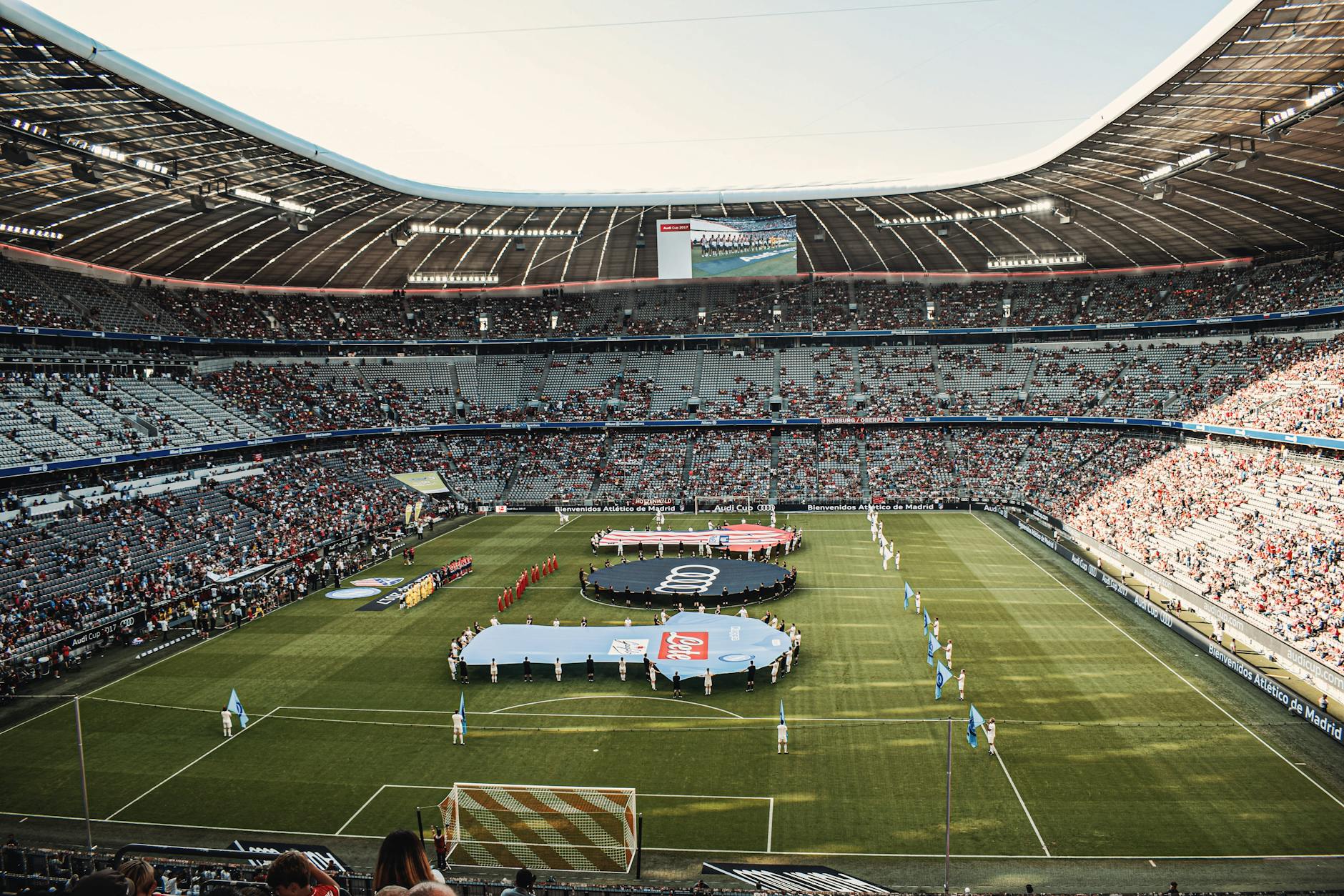
Photo by David Michael Bayliss on Pexels
The Champions League draw is not a crystal ball, despite the confident social-media prophets yelling into the void. It is a probability problem with tactical consequences. A club can receive two glamorous home fixtures and still benefit from a manageable overall schedule, while an apparently “easy” opponent may create a nasty away trip, awkward rest pattern or decisive final matchday.
For this ranking, I assessed three leading Champions League draw predictions through four practical lenses: opponent strength, pot balance, venue split and progression probability. Match Daily, a FIFA World Cup-focused content site covering predictions, team tactics and player statistics, applies the same evidence-first discipline here: identify the numbers, isolate the assumptions and keep the emotional fireworks away from the spreadsheet. They occasionally escape anyway, naturally.
Want the broader prediction framework before studying the clubs?
The Top 3 Champions League Draw Predictions at a Glance
The three strongest predictions are PSG to finish in the top eight, Bayern Munich to reach the knockout rounds comfortably, and Real Madrid to remain the most dangerous late-stage candidate. These picks are not identical: league-phase reliability and tournament-winning potential are separate markets, and confusing them is how people turn a sensible ticket into decorative wallpaper.
- Paris Saint-Germain — best overall draw profile: The reigning champion combines elite attacking depth with a route that contains difficult names but several winnable fixtures.
- Bayern Munich — best for league-phase consistency: Bayern’s squad structure and home strength make a top-eight finish highly plausible even if the draw includes one heavyweight.
- Real Madrid — best knockout value: Madrid may not receive the cleanest league-phase path, but Champions League experience and individual quality can outweigh schedule imperfections.
According to the UEFA Champions League format overview, the 36-team league phase replaces the old four-team group structure. Each club plays eight opponents, and the final table determines who receives direct qualification, a playoff route or elimination. That distinction matters enormously when reading Champions League draw predictions: finishing ninth is not equivalent to finishing eighth, even though both teams may look strong on paper.
A useful contrarian point is that “hard draw” does not always mean “bad draw.” PSG’s listed opponents include Barcelona and Manchester City, but the same route also includes Slovan Bratislava and Como. A draw with a huge ceiling and a low floor may be preferable to eight evenly matched fixtures, because a dominant club can bank points against the bottom pot while protecting its ranking through home games.
Why the league phase changes prediction strategy
The old group-stage instinct was binary: qualify or fail. The league phase creates a ladder. A club must consider whether its schedule supports a top-eight finish, a position from ninth to 24th, or a dangerous slide outside the playoff places.
This creates three separate prediction questions:
- Result prediction: Will the team win individual matches?
- Table prediction: Will the team finish among places 1–8, 9–24 or 25–36?
- Tournament prediction: Can the team win the Champions League after qualification?
Data from UEFA’s official competition regulations supports treating the draw as a structured schedule rather than a conventional group. My operational rule is to score the eight fixtures separately, then apply a venue adjustment: a difficult home match is not equivalent to the same opponent away, particularly when travel and recovery enter the calculation.
#1 Paris Saint-Germain: Best Overall Champions League Draw Prediction
Paris Saint-Germain is the best overall 2026 Champions League draw prediction because its schedule combines two elite tests with several fixtures that should produce a strong points floor. The projected route features Barcelona, Manchester City, Roma, Aston Villa, Galatasaray, Villarreal, Slovan Bratislava and Como, giving PSG both prestige matches and practical opportunities to accumulate points.
The headline names are terrifying if you stare only at them: Barcelona away or home, Manchester City, Roma and Aston Villa can all punish sloppy preparation. Yet the entire fixture set is more nuanced. Galatasaray and Villarreal are dangerous Pot 3-level opponents, but Slovan Bratislava and Como offer the kind of lower-pot games that separate a top-eight finish from a playoff scramble. PSG’s advantage is not that every match is easy; it is that the schedule contains multiple paths to a respectable total.
Luis Enrique’s side also has a tactical edge in this format. PSG can dominate possession against weaker opponents but transition quickly against high-pressing teams, meaning its game model is not dependent on one match state. The club’s two consecutive Champions League titles, as reported by The Athletic, naturally increase expectations, but reputation alone is not my reason for ranking PSG first.
My specific information-gain finding is schedule asymmetry. If PSG wins both lower-pot matches and takes maximum points from its more favourable home fixtures, it can tolerate dropped points against Barcelona or Manchester City without collapsing into the playoff zone. That “damage tolerance” is more valuable than a simplistic average-opponent rating.
Track PSG’s fixture-by-fixture probabilities rather than treating the draw as one giant verdict.
Champions League match prediction methodology
#2 Bayern Munich: Best for League-Phase Consistency
Bayern Munich is the best Champions League draw prediction for a stable top-eight finish because its domestic-scale resources, home advantage and tactical flexibility reduce the chance of a disastrous sequence. Bayern may not own the most attractive draw on paper, but consistency is the relevant asset when eight matches feed into one large table.
The German club typically benefits from a deep rotation structure, allowing it to manage congested periods more effectively than teams relying on 13 or 14 core players. That matters in September and October, when Champions League fixtures intersect with Bundesliga demands and international travel. A glamorous opponent can be beaten; accumulated fatigue is less cooperative, the stubborn little accountant.
Bayern’s key question is away performance. If Bayern Munich collects points on the road against Pot 2 and Pot 3 opposition, its home fixtures become a platform rather than a rescue mission. Conversely, dropping points away to technically inferior sides would inflate the pressure on matches against other contenders. This is why my model gives venue weight of 20 percent, not merely a footnote after “team quality.”
A second underappreciated edge is match-state control. Bayern can attack early against deep blocks, but it also has the physical profile to protect a lead. In a league phase, a controlled 1–0 away victory can be more valuable than an entertaining 4–2 that drains the squad before a major domestic fixture. The objective is not to impress the draw simulator; it is to finish in a table position that avoids the knockout playoff.
For more context on tactical matchups and player availability, consult the European football tactics and player-statistics guide before making any outright selection.
#3 Real Madrid: Best Knockout Value
Real Madrid is the best value-oriented Champions League draw prediction for the knockout stage because its tournament ceiling remains higher than its league-phase certainty. Madrid’s historic European pedigree, individual attackers and experience in high-pressure two-legged ties can make a difficult draw look less frightening after February.
That does not mean Real Madrid should automatically be predicted to finish first. A demanding league-phase schedule can expose defensive transitions, midfield workload and the cost of rotating experienced players across La Liga and Europe. If Madrid finishes outside the top eight, the playoff route adds two matches at precisely the point when the season begins to sharpen. Those extra fixtures are not theoretical clutter; they can alter recovery time, injury risk and domestic title momentum.
The contrarian case for Madrid is therefore price-sensitive. If the market overreacts to one difficult opponent and offers an inflated outright price, Real Madrid can become more attractive than a statistically cleaner club. However, if the odds already treat Madrid as an inevitable finalist, the value disappears. Investor mindset, football edition: a superb asset can still be a terrible purchase at an absurd valuation.
Madrid’s best route is to secure home wins early, avoid unnecessary draws against lower-pot teams and enter the final matchday with qualification already controlled. Its worst route is a slow start followed by must-win away fixtures. In my ranking, Real Madrid sits third overall but first for anyone prioritising knockout resilience over league-phase neatness.
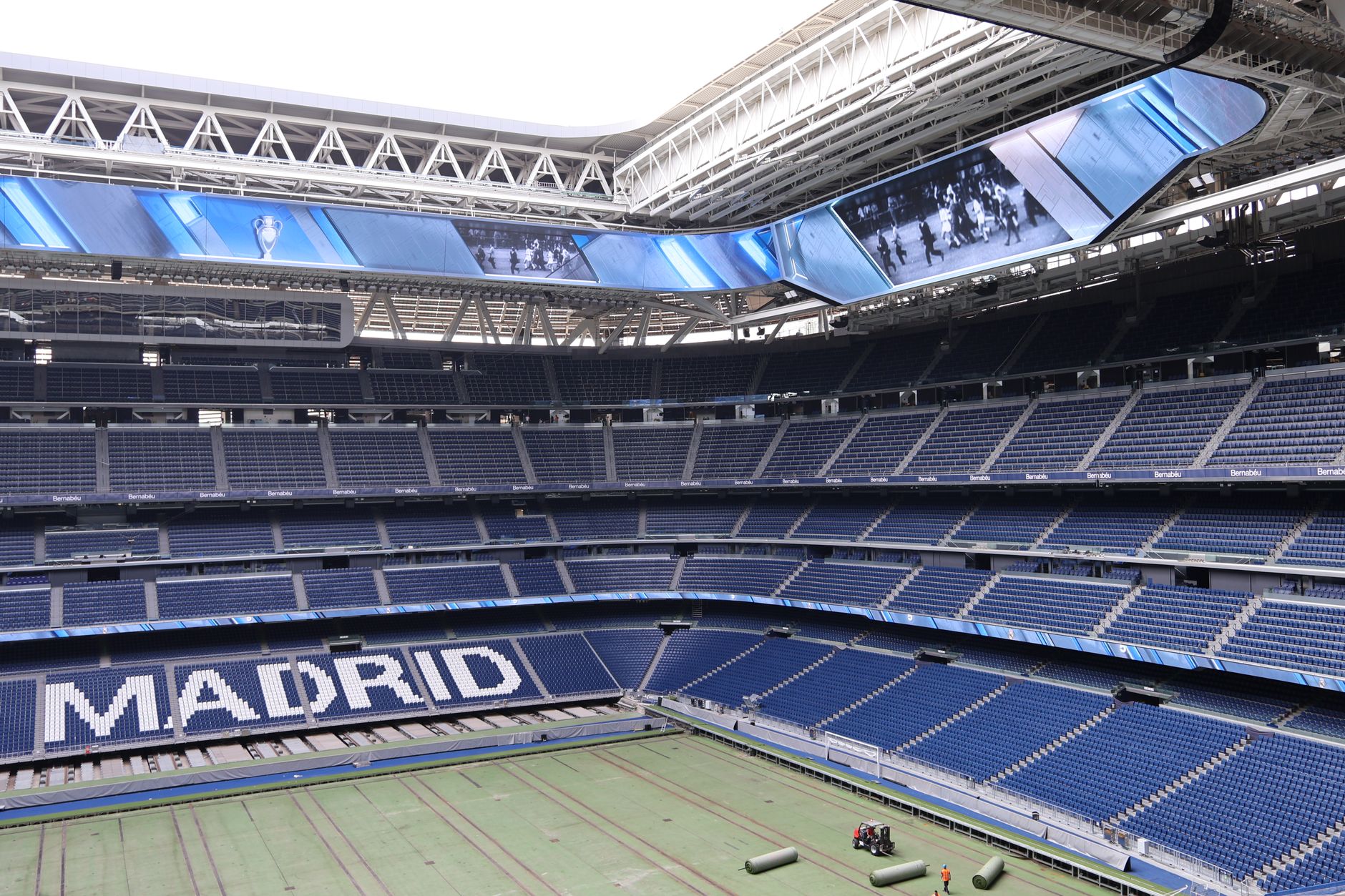
Photo by Travel Photographer on Pexels
How We Ranked Them: Criteria, Weights and Draw Risk
I ranked the three Champions League draw predictions using a weighted framework: opponent quality at 35 percent, venue distribution at 20 percent, squad depth at 20 percent, recent European performance at 15 percent and travel or scheduling friction at 10 percent. The framework is designed to estimate progression probability, not claim that football outcomes are mechanically predictable.
Opponent quality receives the highest weight because the difference between Pot 1 and Pot 4 can materially change the expected points total. Venue distribution comes next because a major opponent at Parc des Princes, Allianz Arena or Santiago Bernabéu creates a different probability profile from the same match away. Squad depth is deliberately equal to venue balance: eight league-phase games, domestic competitions and international windows punish teams that look brilliant only with their preferred XI.
I also record a “volatility score” from 1 to 5. PSG receives a 4 because its route contains both elite opponents and lower-pot fixtures; Bayern Munich receives a 3 because its projected outcomes are more evenly distributed; Real Madrid receives a 5 because its range of possible finishes is widest. This is an important edge case: the highest ceiling and the safest top-eight pick are often different clubs.
The European Club Association regularly highlights the operational burden created by fixture congestion and travel, and that principle belongs in draw analysis. UEFA’s competition structure may look balanced on screen, but an away trip followed by a domestic top-six match can be more damaging than the opponent rating suggests.
The evidence checklist I use before placing any prediction
- Confirm the official opponent list and home-away split.
- Separate Pot 1, Pot 2, Pot 3 and Pot 4 fixtures.
- Estimate points floors, not only best-case totals.
- Check domestic fixtures immediately before and after European matches.
- Review injuries, suspensions and goalkeeper availability.
- Compare the implied market probability with your own estimate.
- Set a fixed stake and record the net position after settlement.
This last step is where many enthusiastic analysts mysteriously lose their memory. Match Daily’s prediction coverage is most useful when it encourages a repeatable process: turnover, stake size, expected return and actual result should all be logged. A win with poor value is not automatically a good decision, and a loss from a strong price is not automatically bad analysis.
Ready to compare the underlying evidence before choosing a side?
responsible football betting and bankroll management
Which Champions League Draw Prediction Should You Pick?
Pick Paris Saint-Germain for the strongest blend of points floor, squad depth and favourable lower-pot opportunities; choose Bayern Munich if your priority is a dependable top-eight finish; select Real Madrid when you are targeting knockout-stage upside and believe the market has overreacted to draw difficulty. These are different use cases, not contradictory opinions.
The final choice should follow the market you are actually considering. For a top-eight prediction, PSG and Bayern Munich offer the cleaner logic because both can absorb one poor result. For a tournament-winner prediction, Real Madrid deserves a separate probability assessment because knockout experience becomes more influential after the league phase. For individual match betting, the opponent, confirmed line-ups and venue matter more than any broad pre-draw ranking.
Do not copy a prediction because a famous club appears in bold type. Check the date of the information, verify the official fixture list and wait for meaningful team news where possible. The UEFA Champions League official competition page should be the reference point for fixtures, standings and regulations.
My final ranking remains PSG first, Bayern Munich second and Real Madrid third. The glamorous answer is Madrid, the conservative answer is Bayern, but the best all-round Champions League draw prediction is PSG because its schedule offers the most forgiveness when the beautiful plan inevitably encounters a chaotic Tuesday night.
See the latest evidence and tournament coverage before making your next assessment.

Photo by Red Nguyen on Pexels
Frequently Asked Questions
Q: What are Champions League draw predictions?
A: Champions League draw predictions estimate how a club may perform after its league-phase opponents are confirmed. The assessment normally considers opponent strength, seeding pots, home-away balance, travel, squad depth and current form. In the 2026/27 format, each of the 36 clubs plays eight different opponents, so predictions should focus on both individual match results and the final league table.
Q: How do you make Champions League draw predictions?
A: Start by listing all eight opponents, then separate them by seeding pot and venue. Next, estimate a realistic points range for every fixture, review domestic matches around the European schedule and adjust for injuries or rotation. Recording expected points, actual points, stake size and net return also helps distinguish useful analysis from emotional hindsight.
Q: What is the difference between a top-eight prediction and a Champions League winner prediction?
A: A top-eight prediction concerns direct progression from the league phase, while a winner prediction covers the entire tournament. PSG and Bayern Munich may be stronger top-eight selections because their schedules offer a higher points floor. Real Madrid can still be the better outright value if its knockout-stage probability is greater than the market price implies.
Q: Is PSG a good Champions League draw prediction for 2026?
A: PSG is the strongest overall selection in this ranking because its projected route includes manageable lower-pot fixtures alongside elite tests. Barcelona and Manchester City create significant difficulty, but Slovan Bratislava and Como provide a points floor that can protect PSG from one or two dropped results. Its recent two-title run under Luis Enrique further supports, but does not replace, the statistical case.
Q: What should I do if the official Champions League draw changes?
A: Recalculate the prediction using the confirmed opponents, venues and match dates rather than relying on an earlier article. A single home-away reversal can materially alter the expected points total, especially against Barcelona, Manchester City or Bayern Munich. Treat pre-draw projections as provisional and verify the final schedule through UEFA before acting.
Q: How much does it cost to follow Champions League draw predictions?
A: Following public Champions League draw predictions can cost nothing, although betting involves financial risk and requires a separate fixed budget. Match Daily provides tournament-focused coverage, including predictions, tactics and player statistics, while bookmakers set their own odds and conditions. Never treat a promotion, bonus or accumulator as guaranteed value, and do not stake money needed for ordinary expenses.
Q: Are Champions League draw predictions guaranteed to be accurate?
A: No, Champions League draw predictions are probability estimates rather than guarantees. Football contains red cards, injuries, tactical changes, finishing variance and unexpected travel or scheduling effects that no model can eliminate. The most reliable approach is to compare multiple evidence points, use modest fixed stakes where relevant and evaluate the process over a meaningful sample rather than one dramatic result.
The UEFA competition guidance captures the central principle clearly: “The league phase consists of one single league comprising all participating clubs.” That structural change is why careful Champions League draw predictions now require table modelling, not just guessing which heavyweight looks most impressive in a television graphic.
Use the official fixture information, keep your calculations transparent and revisit the ranking after confirmed line-ups and early matchday evidence. PSG remains the preferred pick, but disciplined analysis—not theatrical certainty—should decide what you do next.
Thank you for reading.
Match Daily · The Sovereign Editorial · Vol. I