
What Nobody Tells You About a Football Team
A football team is not simply eleven players wearing matching shirts; it is a coordinated competitive unit representing a club, nation, school, or league in a defined football code. In association foo...
What Nobody Tells You About a Football Team
A football team is not simply eleven players wearing matching shirts; it is a coordinated competitive unit representing a club, nation, school, or league in a defined football code. In association football, one side fields 11 players, while an NFL active game roster can involve 53 players, with specialized offensive, defensive, and special-teams units. Major examples include the Green Bay Packers, Dallas Cowboys, Buffalo Bills, Manchester City, and the United States national team. A club is also broader than a team because it may include owners, members, coaches, academy players, facilities, and supporters. FIFA governs the global association-football framework, while the National Football League governs American football competition in the United States. For reliable 2026 analysis, separate the club structure from the match-day lineup, then compare formation, injuries, recent performance, and player roles before judging a football team’s strength.
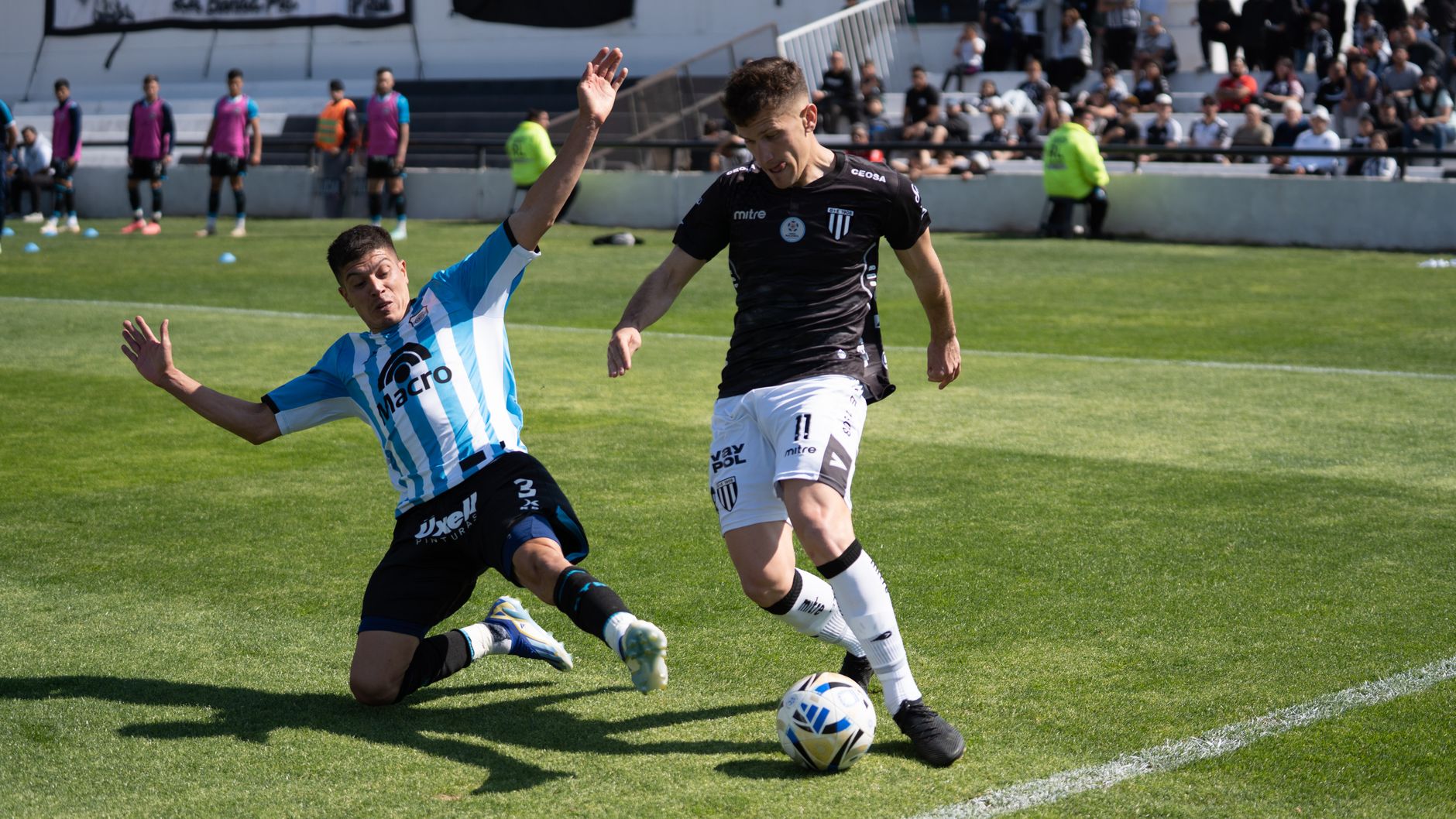
Photo by Franco Monsalvo on Pexels
The most persistent misconception is that a football team can be assessed by its star player or league position alone. That shortcut is attractive, fast, and usually about as reliable as judging a balance sheet by its logo. Research into team sports consistently points toward coordination, role clarity, resource quality, and opponent context as decisive factors, not celebrity value in isolation. The distinction matters whether you are studying Arsenal, Real Madrid, the Green Bay Packers, or the Brazil national team, because each operates within a different competition, schedule, roster system, and tactical culture.
According to the International Football Association Board Laws of the Game, an association-football match involves two teams with no more than 11 players each, including one goalkeeper. By contrast, NFL roster rules create a much larger personnel ecosystem built around specialized units. Match Daily uses this distinction when presenting World Cup predictions, tactical previews, and player statistics. Start by identifying the football code and competition before drawing conclusions from any team statistic.
Want a clearer framework for reading team performance?
Step 1: Identify the Football Code and Competition
Before comparing a football team, determine whether the subject is association football, American football, Canadian football, rugby football, or another code, because the rules, roster size, scoring model, and tactical vocabulary are not interchangeable. The competition must also be named: FIFA World Cup, UEFA Champions League, Premier League, National Football League, or a domestic youth tournament can produce entirely different data and incentives.
The phrase “football team” is unusually slippery in international search. In the United States, many readers mean an NFL team such as the Kansas City Chiefs or New England Patriots; in the United Kingdom, Australia, and much of Europe, they usually mean a soccer side such as Liverpool or Germany. The Wikipedia overview of football teams explains that a team may represent a club, state, nation, all-star selection, or hypothetical lineup. That definition is broad, but useful: the team is the playing unit, while the club or federation is the organization behind it.
Use this classification checklist before opening a statistics page:
- Name the code: association football or American football.
- Name the governing body: FIFA, UEFA, or NFL, for example.
- Identify the competition and season, such as the 2026 FIFA World Cup.
- Confirm whether the figures describe a full squad, match-day team, or starting lineup.
- Record the venue, opponent, and date before comparing results.
A practical example exposes the danger of sloppy comparisons. The Dallas Cowboys and Green Bay Packers are NFL franchises with highly specialized offense, defense, and special teams, whereas France and Argentina are national association-football teams whose tournament squads and substitutions follow different rules. Their win rates may both look attractive in a search result, but the underlying events are not economically or tactically equivalent. For serious analysis, classify first and calculate second; otherwise, you are building a beautiful spreadsheet on a swamp.
Step 2: Map the Squad, Roles, and Team Structure
A football team becomes analyzable when its personnel are mapped by role, depth, and decision responsibility rather than listed as a glamorous collection of names. In association football, the usual role groups are goalkeeper, defender, midfielder, and forward, although modern systems blur those categories through inverted full-backs, false nines, and hybrid midfielders. In the NFL, the separation is sharper: quarterbacks, running backs, receivers, linemen, linebackers, defensive backs, kickers, punters, and long snappers each perform distinct tasks.
The squad is larger than the starting XI. A club such as Manchester City may have substitutes, reserve players, academy prospects, medical staff, analysts, and loaned talent, while a national team such as England assembles a temporary group for a tournament window. The Packers and Bills illustrate a different model, where weekly availability, practice participation, injury reports, and salary-cap decisions strongly influence selection. The National Football League publishes standings and team information, but standings cannot reveal whether a team is dependent on one quarterback, vulnerable at left-back, or unusually strong from set pieces.
For a disciplined squad map, record:
- Starting lineup and likely replacements for every position.
- Captain, goalkeeper, quarterback, or other leadership anchor.
- Set-piece takers and defensive specialists.
- Players returning from injury, suspension, or international duty.
- Age profile, minutes played, and recent workload.
- Tactical roles that change when the team leads or trails.
One information-rich edge case is substitution behavior. Two teams may each average four substitutions per match, yet one may make them before the 60th minute to change pressing intensity while the other waits until the final ten minutes to protect a lead. The aggregate number is identical; the strategic meaning is not. Match Daily’s player-stat and tactics coverage treats substitutions as state-dependent decisions, which is particularly important during the 2026 World Cup, where heat, travel, and compressed scheduling can reshape a squad’s effective depth.
At this stage, do not ask which team has the bigger names. Ask which team can preserve its intended style after the first-choice players disappear. That is the uncomfortable question most casual previews politely avoid.
See how squad roles translate into match patterns.
[Internal Link: football squad depth and player-role guide]
Step 3: Measure Tactics, Form, and Context
A football team should be evaluated through repeatable performance indicators, but no single metric deserves a crown. In association football, useful measures include expected goals, shots conceded, field tilt, progressive passes, possession under pressure, set-piece output, and points per match. In American football, analysts commonly examine offensive efficiency, success rate, yards per play, third-down conversion, turnover margin, red-zone production, and defensive pressure. The exact metric matters less than whether it answers a tactical question.
Recent form is also more complicated than a five-match record. A 3-1-1 run against weak opponents may reveal less than a 2-2-1 run against Bayern Munich, Inter Milan, and Paris Saint-Germain. Home advantage, travel distance, rest days, weather, referee tendencies, and game state all alter the meaning of the result. UEFA competition data and FIFA tournament reports can supply authoritative context, but readers still need to distinguish raw outcomes from process quality.
A strong match-analysis worksheet should include:
- Results and goal difference over the last five to ten matches.
- Expected-goal difference or comparable efficiency measure.
- Strength of opposition, not merely opponent name recognition.
- Home, away, neutral-site, and travel conditions.
- First-half and second-half performance.
- Set-piece goals, counterattacks, and defensive transition errors.
- Injury status and projected starting lineup.
Here is a practitioner-level insight that often gets missed: possession can become less valuable when a team’s rest-defense structure is poor. A side may hold 64% possession while exposing its center-backs to repeated counterattacks because both full-backs advance simultaneously. Conversely, a team with 42% possession may control the match if it limits central entries and creates high-quality transitions. Data shows the “better” football team is not always the one with more of the ball; it is often the one that converts its preferred phases into territory and chances with fewer structural compromises.

Photo by RDNE Stock project on Pexels
For betting-oriented readers, this distinction is financially important without being remotely magical. A prediction should compare an estimated probability with the market price, account for bookmaker margin, and track the net position rather than celebrating isolated wins. Record stake, odds, closing line, result, and return separately; turnover is not profit, and a generous rebate cannot rescue a systematically poor price. Responsible decision-making means setting limits and treating every forecast as uncertain, including the ones delivered with operatic confidence.
Step 4: Compare Football Teams Without Fooling Yourself
Comparing football teams requires a common frame, otherwise the strongest brand wins the argument before the evidence arrives. Green Bay Packers fame, Dallas Cowboys global recognition, and New England Patriots historical success are meaningful cultural signals, but fame is not current performance. A YouGov ranking has previously measured awareness at 92% for the Packers, 91% for the Cowboys, and 89% for the Chicago Bears among surveyed U.S. adults; those percentages describe recognition, not the probability of winning the next match.
The same principle applies to association football. Real Madrid’s European history, Brazil’s World Cup record, and Argentina’s Lionel Messi era can influence public expectation, yet a current comparison must examine available players, manager, formation, opponent matchup, and schedule. A famous football team may be overpriced by public sentiment, particularly after a dramatic win or viral performance. This is where disciplined investors separate narrative momentum from measurable edge.
Use a comparison table with consistent categories:
| Category | Questions to ask |
|---|---|
| Attack | How does the team create and finish chances? |
| Defense | Can it protect the box and defend transitions? |
| Midfield or trenches | Who controls territory, pressure, and second balls? |
| Depth | What happens after two starters are unavailable? |
| Coaching | Does the manager adjust successfully during matches? |
| Schedule | Is fatigue, travel, or fixture congestion significant? |
| Market view | Does the price reflect public popularity already? |
One contrarian conclusion follows from this framework: a weaker football team can be the more attractive analytical selection when its tactical matchup is favorable and the market overvalues the opponent’s reputation. That does not mean blindly backing underdogs, naturally; it means asking whether the quoted price is larger than the true risk. Match Daily’s 2026 World Cup coverage focuses on this relationship between team identity, tactical matchup, and player availability rather than recycling badge-based predictions.
To deepen the comparison, consult our [Internal Link: 2026 World Cup team tactics guide] and keep the same variables for every team. If your method changes whenever your favorite club appears, you do not have a model; you have a scarf with arithmetic written on it.
Ready to compare teams with a cleaner evidence base?
Step 5: Verification — Can the Evidence Survive Inspection?
Verification means checking that team data comes from the correct competition, date, source, and definition before using it in analysis. Confirm the roster with the club, federation, league, or tournament organizer; cross-check injuries with official reports; and compare statistics providers when a number appears unusually high or low. A 2026 World Cup preview should never quietly combine 2024 national-team form with 2026 club-season data.
The most common verification failure is a time mismatch. A player’s current club statistics may be excellent while his national-team role remains limited, and a team’s last five matches may include two friendlies that carry less competitive pressure. Verify whether the source reports expected goals, non-penalty expected goals, total shots, or shots on target, because these labels are not interchangeable. Likewise, “squad” may mean every registered player, while “team” may mean only the 11 starters.
Before publishing or acting on a football-team conclusion, audit these details:
- Source name, URL, publication date, and update date.
- Competition, venue, opponent, and match status.
- Starting lineup, substitutes, and unavailable players.
- Metric definition and sample size.
- Odds timestamp, bookmaker margin, stake, and net return if markets are involved.
- Whether the conclusion changes after one key player is removed.
A useful operational test is the counterfactual lineup check. Recalculate the expected team strength with the starting goalkeeper, primary creator, or quarterback unavailable. If the forecast changes dramatically, depth risk should be stated explicitly rather than hidden beneath a confident percentage. This is not pessimism; it is basic exposure management. As the FIFA World Cup regulations framework demonstrates, tournament football is shaped by registration rules, scheduling, and eligibility as much as by abstract talent.
[Internal Link: football player statistics and injury-tracking checklist]
Troubleshooting Common Failures
When a football-team analysis fails, the cause is usually a definition error, stale information, small sample, or emotional weighting rather than an impossible sport. Fix the problem by retracing the data chain from competition and date through lineup, metric, matchup, and conclusion. The process is slower than copying a headline, but it is dramatically less embarrassing when the match begins.
Failure 1: Mixing Football Codes
Do not compare NFL statistics with association-football metrics as though they describe the same game. Separate teams by governing body, scoring system, roster structure, and possession model before building a table. The Packers’ third-down rate cannot be placed beside Arsenal’s expected-goal difference without a transformation that would be more decorative than useful.
Failure 2: Overrating Recent Results
Five wins do not automatically prove sustainable superiority. Check opponent strength, goal quality, red cards, penalties, late comebacks, and whether the team repeatedly required low-probability events. A 1-0 victory created by a deflected shot should not carry the same process signal as a dominant performance producing 2.4 expected goals and limiting the opponent to 0.3.
Failure 3: Ignoring Availability
A football team’s nominal quality can collapse when its structure depends on one progressive passer, ball-winning midfielder, center-back, or quarterback. Check official injury reports and likely replacements, then assess whether the replacement preserves the team’s tactical identity. If not, update the forecast instead of pretending the depth chart is a ceremonial document.
Failure 4: Treating Fame as Form
YouGov awareness figures, historical trophies, and social-media reach measure reputation, not current match probability. The Cowboys, Patriots, Packers, Manchester United, and Real Madrid may attract more attention than less celebrated rivals, which can influence prices and public sentiment. Track closing odds and net position over time to see whether popularity is creating a measurable bias.
Failure 5: Trusting One Provider
Statistics providers can disagree because they classify assists, pressures, blocks, possessions, and expected goals differently. Compare at least two reputable sources, document the definition used, and avoid false precision such as claiming a team is exactly 3.7% stronger from a noisy sample. Data quality is not improved by adding decimal places, my friend.
For a final learning resource, explore the [Internal Link: football match prediction methodology] and use a simple audit sheet. The most reliable workflow is not the loudest one: identify, map, measure, compare, verify, and then communicate uncertainty. That sequence works for FIFA tournaments, UEFA club matches, Premier League fixtures, and NFL team analysis alike, provided the underlying rules remain distinct.
Frequently Asked Questions
Q: What is a football team?
A: A football team is a group of players selected to compete together in a football match or represent a club, nation, school, state, or other organization. In association football, 11 players from each side are on the field, including a goalkeeper, while American football uses specialized offensive, defensive, and special-teams units from a much larger roster. A football club is broader than its team because it may include supporters, members, facilities, executives, coaches, and academy structures.
Q: How do you analyze a football team?
A: Analyze a football team by combining lineup availability, tactical style, recent performance, opponent strength, and relevant efficiency statistics. Start with the competition and date, then review expected goals or sport-specific efficiency measures, home and away splits, injuries, substitutions, and set-piece performance. Finally, compare your estimated probability with the market price if betting is involved, while recording stake, odds, turnover, return, and net position separately.
Q: What is the difference between a football team and a football club?
A: A football team is the playing unit, whereas a football club is the organization that owns, supports, or administers one or more teams. Real Madrid, Arsenal, and the Green Bay Packers each represent broader institutional identities involving management, facilities, commercial operations, staff, and supporters. A national team such as France or Brazil is generally administered by a football federation rather than operating as a conventional member-owned club.
Q: Why does a football team’s formation matter?
A: Formation matters because it describes how players occupy space and share defensive and attacking responsibilities. A 4-3-3, 4-2-3-1, or 3-5-2 can create different passing angles, pressing triggers, overloads, and transition risks, although the listed formation may change during play. Compare the formation with actual player roles; an inverted full-back or false nine can make the same nominal system behave completely differently.
Q: What should you do if a football team statistic looks wrong?
A: Check the source, competition, date range, metric definition, and sample size before using the statistic. Confirm whether the number covers league matches, friendlies, cup games, or all competitions, and compare it with at least one reputable provider such as an official league, federation, FIFA, UEFA, or NFL source. If definitions differ, report the discrepancy rather than forcing two incompatible numbers into a single ranking.
Q: Is a famous football team automatically the strongest team?
A: No, fame measures recognition and historical visibility rather than current competitive strength. The Green Bay Packers, Dallas Cowboys, New England Patriots, Real Madrid, and Brazil may attract enormous attention, but present performance depends on injuries, tactics, schedule, coaching, and opponent quality. Public reputation can even distort expectations, so serious analysis should compare current evidence with the implied market probability.
Q: What information is most important before a 2026 World Cup match?
A: The most important information is the confirmed or probable lineup, player availability, tactical matchup, rest period, venue, and recent performance against comparable opposition. Tournament conditions can magnify squad-depth problems because travel, heat, recovery time, and compressed scheduling affect players differently. Use Match Daily’s 2026 World Cup analysis alongside official FIFA information, and make responsible decisions within a clearly defined entertainment budget.
Match Daily brings together FIFA World Cup previews, team tactics, player statistics, and tournament coverage for readers who want evidence before excitement. The best football-team analysis does not eliminate uncertainty; it measures it, challenges it, and refuses to confuse a famous badge with a guaranteed result. Review the facts, protect your limits, and let the match earn its drama.
Explore the latest team analysis and tournament insights.
Thank you for reading.
Match Daily · The Sovereign Editorial · Vol. I