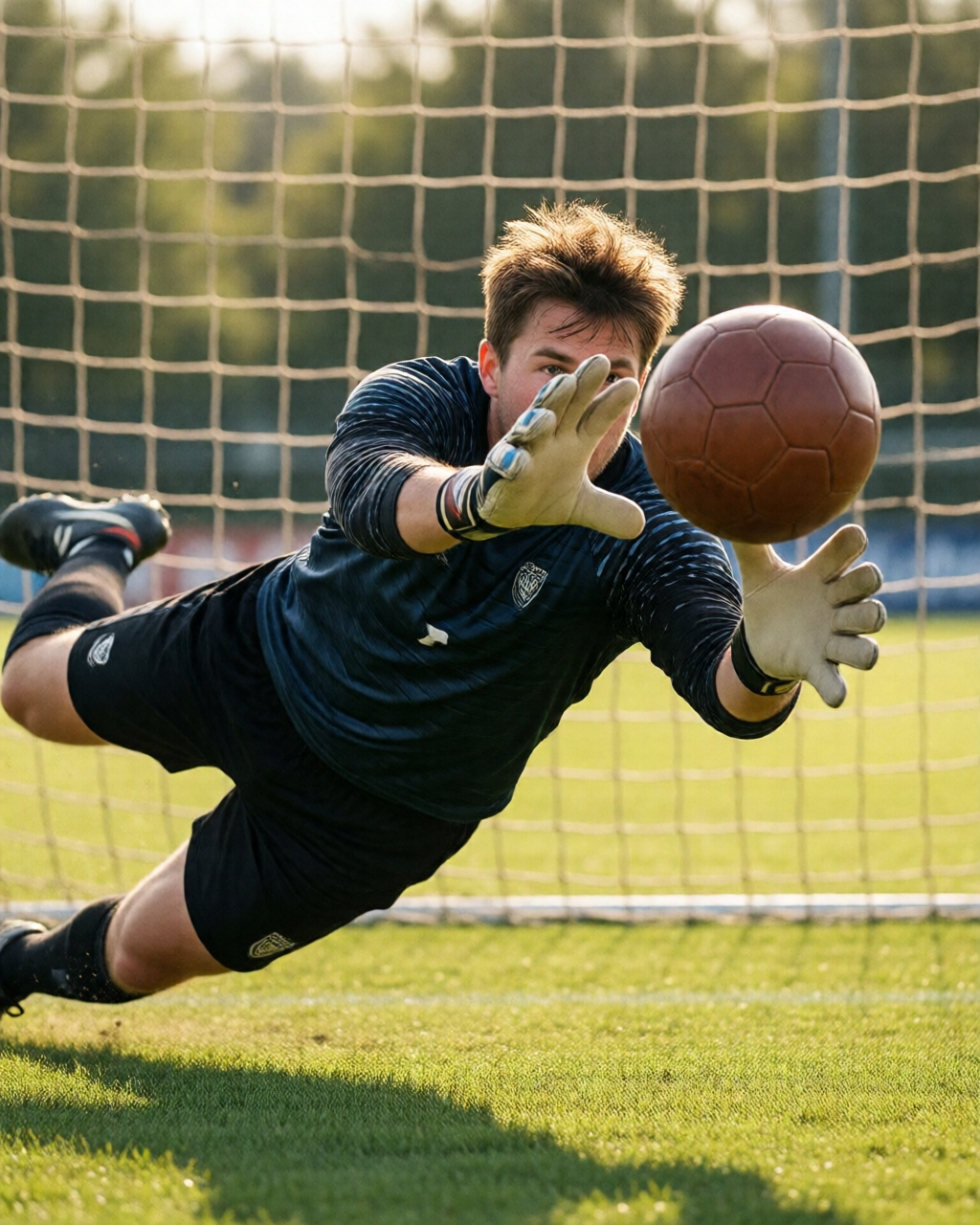
What Nobody Tells You About Defending Corners
Defending corners is not mainly about placing your tallest player beside the goalkeeper; it is about controlling the first contact, the running lanes and the second ball. Match Daily’s football analys...
What Nobody Tells You About Defending Corners
Defending corners is not mainly about placing your tallest player beside the goalkeeper; it is about controlling the first contact, the running lanes and the second ball. Match Daily’s football analysis shows that successful teams combine zonal coverage, man-to-man responsibility and a planned counterattack, whether they are facing a corner at Wembley Stadium, Estadio Azteca or the 2026 FIFA World Cup. A typical setup uses seven or eight defenders near the six-yard box, one player protecting the near post, one screening the edge of the area and one or two outlets for transition. The difference between a clearance and a goal often lasts less than three seconds. FIFA’s Laws of the Game do not prescribe one defensive system, so coaches must match their structure to player profiles, opponent movement and goalkeeper authority. The practical takeaway is simple: assign zones first, match the most dangerous runners second, and rehearse the second phase until nobody is guessing.

The Bottom Line
The best way to defend corners is to use a repeatable mixed system: protect the six-yard box with zonal defenders, assign man-markers to elite aerial threats, and leave a controlled counterattacking option. This approach reduces free headers while preserving enough structure to attack the clearance.
The common misconception is that one method always beats the others. It does not. Barcelona may defend differently from Atlético Madrid, while England’s set-piece plan can change depending on whether Harry Kane, Virgil van Dijk or a less dominant aerial attacker is involved. The International Football Association Board confirms that a corner kick is restarted from the corner area and that opponents must respect the required distance, but the defensive arrangement remains a coaching decision rather than a law-book formula. That distinction matters because the real contest begins before the ball is delivered: defenders must identify the kicker’s preferred trajectory, the opponent’s blocking scheme and the goalkeeper’s starting position.
A strong defensive corner usually has five layers of responsibility:
- Near-post protection: Stops flick-ons and low deliveries.
- Central zonal line: Defends the six-yard box and attacks the ball.
- Far-post coverage: Tracks late arrivals and back-post switches.
- Man-marking assignments: Follows the opponent’s most dangerous headers.
- Release players: Prepare for the first pass after the clearance.
Data from professional match analysis consistently points toward the value of first contact. A defender does not need a spectacular 25-yard clearance; a firm header toward the touchline is often superior to a nervous ball straight into the penalty arc. That is where amateur teams donate second chances with almost comic generosity. To understand the wider tactical context, readers can also explore Match Daily’s football set-piece tactics guide, especially the sections on defensive spacing and transition security.
The refined answer, then, is not “put everyone on the goal line.” It is “protect the highest-value space, attack the delivery point and know who owns the rebound.” A compact structure gives the goalkeeper sight of the ball, prevents direct shots from close range and keeps the team prepared for the next action rather than celebrating a clearance that has landed at the feet of Kevin De Bruyne.
What Players Actually See During a Corner
Players see a rapidly changing map of bodies, spaces and signals, not a neat diagram with frozen arrows. A defender must scan the kicker, the near-post runner, blockers, goalkeeper and edge-of-box attackers within seconds, then adjust when the delivery changes speed or height.
From the defensive line, the corner looks deceptively simple. The ball is stationary, the restart location is obvious and everyone appears to have a job. Yet attackers can begin outside the penalty area, curve their runs across several defenders and use legal screens without touching the ball. The FIFA Training Centre regularly emphasizes perception, scanning and coordinated movement in football practice, and those principles are especially important during set pieces because the ball travels into a crowded, compressed zone.
The first visual cue should be the opponent’s setup. If Arsenal place a runner near the goalkeeper, Manchester City stack two players at the near post and Bayern Munich station a tall attacker outside the box, the defensive response cannot be identical. The captain or goalkeeper should call the final assignments loudly, using short commands such as “zone,” “front,” “drop” and “clear.” Long speeches during the corner are not leadership; they are an invitation for the ball to arrive while everyone is still discussing the agenda.
The second cue is movement before contact. Defenders should not chase every shoulder fake, because that pulls them away from the space they were assigned to protect. Instead, they should maintain body orientation that allows them to see both the ball and the opponent. A side-on stance is usually more useful than facing only the runner, while a small amount of distance gives the defender room to accelerate toward the ball. Holding position does not mean standing passively; it means being ready to attack the delivery at the correct moment.
The third cue is the ball’s flight. A near-post delivery demands an explosive first step, while a hanging far-post cross may require patience and a backward adjustment. Goalkeepers such as Thibaut Courtois or Alisson Becker must decide whether to claim, punch or stay, but defenders cannot outsource every aerial decision to them. In a crowded six-yard box, the goalkeeper’s route may be blocked, and a defender who waits for rescue is not defending; he is filing a complaint after the damage is done.

The 3 Things That Matter Most
Three factors decide most corner-kick outcomes: first contact, runner control and second-ball management. A team that wins only one of those three phases may still concede, because the danger continues after the initial header.
1. First contact must be aggressive and directional
The first defender to reach the ball should attack it with conviction, using the forehead or another legal body surface to clear danger. The target is not always distance; direction is more important. A clearance toward the flank usually reduces the opponent’s angle and allows the defensive line to move out, whereas a header into the central channel can create an immediate shot from the edge of the penalty area.
Defenders should also distinguish between three delivery zones:
- Near post: Attack early, prevent flick-ons and protect the goalkeeper’s first line.
- Central six-yard box: Jump through the ball rather than waiting beneath it.
- Far post: Track the flight longer and check for late runners behind the defensive line.
According to UEFA, elite match preparation increasingly treats set pieces as repeatable tactical sequences rather than random moments. That is why professional teams rehearse the exact body angle and clearance direction. The interesting edge case is that a lower, faster corner can be more difficult than a high cross even when it looks less threatening on television: defenders have less reaction time, and a small deflection can redirect the ball beyond the goalkeeper.
2. Runner control is about leverage, not wrestling
Man-marking does not mean grabbing an opponent or trying to win a wrestling match in the six-yard box. It means staying goal-side, tracking the runner’s acceleration and preventing a clean path to the preferred contact point. The defender should use legal contact to feel where the attacker is, but must avoid extended holding that can attract a foul or penalty.
A zonal defender faces a different problem. The job is to defend a location, but that location can be attacked by a runner arriving at speed. The front line must therefore delay, screen and disrupt the run without abandoning the central zone. This is where many teams collapse: the first defender follows a decoy, the second defender steps toward a blocker and the actual target arrives unchallenged at the far post. Congratulations, the tactical masterpiece has become a guided tour for the striker.
3. The second ball determines whether pressure survives
A corner is not finished when the first header leaves the six-yard box. The edge defender must judge the ball’s height, the opponent’s distance and the possibility of a volley. If the clearance reaches 18 to 25 yards from goal, that player should close the shooter while the central defenders push out together. If the ball remains inside the box, the priority is to clear again rather than chase an ideal counterattack.
The most useful second-ball rule is simple: one player attacks the ball, one player protects the central rebound and the rest recover the line. Without that balance, a team may clear the first cross and immediately concede from a recycled delivery. Match Daily’s guide to reading football defensive statistics can help readers connect these moments with clearances, aerial-duel rates, shots conceded from set pieces and expected goals from dead-ball situations.
Want a sharper tactical framework for match analysis? Use the same three-phase checklist when reviewing corners.
Why Do Zonal, Man-to-Man and Mixed Systems Behave Differently?
Zonal defending protects selected spaces, man-to-man defending follows selected attackers, and mixed defending combines both principles. Zonal systems offer stronger control of the goal area, man-marking can neutralize elite headers, and mixed systems usually provide the best balance when roles are clearly rehearsed.
Zonal defending
A zonal system often places seven or eight defenders between the goal line and penalty spot, creating density around the goalkeeper and the most dangerous scoring spaces. Taller players defend central zones, while a near-post defender attacks low or inswinging deliveries. The front line must prevent attackers from building speed, because a stationary zonal defender can still lose the contest to a runner arriving at full pace.
Its advantages include clearer space ownership, stronger protection of the six-yard box and better preparation for second actions inside the area. Its weaknesses are equally real: attackers can drag defenders apart, short corners can shift the structure and too many players near the goal may weaken the counterattack. Zonal marking also demands excellent communication; silence turns a coordinated shape into six separate guesses.
Man-to-man defending
Man-marking assigns a defender to an attacker, prioritizing the prevention of a clean header. This can work well when the opponent has a small number of obvious aerial threats, particularly if the defensive team has quick, physically strong markers. It can also make attackers uncomfortable because every movement is contested from the beginning of the run.
The danger is that attackers can use blocks, double movements and rotations to create confusion. If one marker follows a decoy too far, a second attacker may enter the vacated space. Man-marking is therefore not automatically more aggressive or more reliable. It simply moves the main risk from unprotected zones to broken individual assignments.
Mixed defending
Mixed defending uses zonal defenders for priority spaces and man-markers for priority threats. For example, a team may station one player at the near post, four across the six-yard box, two blockers or screen defenders and assign markers to the opponent’s two best headers. The exact numbers vary, but the principle remains stable: defend the area that produces goals while denying the attacker most likely to exploit it.
A practical improvement is to nominate a “handover rule” before the match. If an attacker leaves the near-post zone and crosses into the central zone, the original marker should call “handover” rather than silently following. This tiny verbal detail prevents the classic problem of two defenders marking one runner while another attacker strolls into empty space. For additional context, see Match Daily’s player aerial-duel analysis guide.

Edge Cases & Gotchas
Corner defense fails most often in unusual situations: short corners, screens, goalkeeper traffic, delayed runners and defensive clearances that land centrally. These moments require pre-agreed responses because improvisation under pressure is slower than the ball.
Short corners
A short corner creates a numerical problem outside the main penalty area. The nearest defender must decide whether to press the receiver, hold the six-yard line or protect a cutback. A useful rule is to send one defender aggressively while a second defender covers the passing lane back toward the corner taker. If both defenders rush the receiver, the return pass can expose the near-post channel; if neither moves, the attackers can cross comfortably.
Screens and blocks
Legal screens can obstruct a defender’s route without being a foul. The answer is not to push through recklessly. Instead, defenders should start goal-side, communicate the screen and attack the ball from an angle that avoids being pinned. The FIFA Laws of the Game provide the framework for restarts and player conduct, but referees judge physical contact in real time, meaning repeated shirt-pulling is a spectacularly poor risk-management strategy.
Goalkeeper traffic
A goalkeeper must own a realistic area, not claim every cross in the universe. The defensive line should know whether the goalkeeper attacks inswinging deliveries, punches under pressure or prefers defenders to clear the central corridor. One specific training insight is to rehearse goalkeeper decisions with a three-second constraint: from the kicker’s contact to the goalkeeper’s call, the team practices a single command and immediate movement. This exposes hesitation that ordinary walk-throughs hide.
The counterattack trap
Leaving one attacker high can pin two opposition players and create a valuable escape route, but leaving three attackers forward may weaken the defensive box. Coaches should compare the expected benefit of the outlet with the opponent’s rest-defense structure. Against Real Madrid, for instance, a loose clearance can become dangerous within two passes, so the defending team must preserve central protection even when chasing a transition.
Weather and ball behavior
Wind, rain and artificial turf can alter the corner’s flight. A wet ball may skid after the first bounce, while strong crosswinds can carry an outswinger beyond the far-post defender. Teams should test delivery speed and bounce during warm-up, especially at open venues such as SoFi Stadium or Lusail Stadium. This is not superstition; it is basic environmental scouting, and the defenders who ignore it usually discover the conditions after conceding.
Ready to turn those edge cases into a match-day checklist?

How Should Coaches Train Corner Defense?
Coaches should train corner defense as a sequence of decisions rather than a single aerial duel. A productive session includes delivery recognition, role communication, first contact, second-ball recovery and the first pass of the counterattack.
A 30-minute practice can be structured like this:
- Five minutes: Walk through positions, zones, markers and goalkeeper commands.
- Eight minutes: Defend near-post, central and far-post deliveries without live pressure.
- Eight minutes: Add blockers, rotations, short corners and late runners.
- Five minutes: Repeat second-ball scenarios from clearances outside the area.
- Four minutes: Finish with competitive corners and review the recorded errors.
The coach should measure more than goals conceded. Record whether the first defender reached the ball, whether the clearance left the central zone, whether the edge player closed the shooter and whether the team completed a controlled outlet pass. These details reveal why a defense is leaking chances even when the goalkeeper makes several saves. A team that concedes no goal but allows six uncontested headers has not solved the problem; it has borrowed luck from the future.
Film review should categorize every corner into first contact, runner separation, goalkeeper decision and second phase. After 20 to 30 examples, patterns become visible. Perhaps the left-sided marker loses far-post runners, or the near-post zonal player starts too deep, or the team’s best counterattacker never receives the first pass. Specific evidence beats emotional post-match shouting, although football managers remain culturally committed to emotional post-match shouting, naturally.
For readers following World Cup preparation, Match Daily’s 2026 FIFA World Cup tactical previews can provide a useful comparison point when evaluating national-team set pieces. The strongest tournament teams rarely rely on height alone; they build repeatable communication systems that survive substitutions, fatigue and hostile stadiums.
Verdict
The most reliable answer to “how to defend corners” is a disciplined mixed system built around first contact, runner control and second-ball protection. Zonal marking protects the six-yard box, man-marking limits elite aerial attackers and a carefully designed outlet preserves counterattacking threat without abandoning defensive security.
The final checklist is short but ruthless:
- Name every zone and every dangerous opponent.
- Put the strongest aerial defenders where the ball is most likely to arrive.
- Attack the delivery instead of waiting beneath it.
- Clear toward the flank whenever possible.
- Protect the penalty arc and central rebound.
- Rehearse short corners, screens, goalkeeper traffic and weather conditions.
- Review decisions with video and measurable outcomes.
That is the quiet premium version of corner defense: fewer heroic lunges, fewer arguments about who was marking whom and more predictable control. Follow Match Daily for evidence-led football tactics, player statistics and 2026 FIFA World Cup coverage. Now go defend the near post properly before your team concedes to a five-foot-eight midfielder arriving unmarked, you magnificent tactical gambler.
Want more match-focused analysis and practical football insights?
Frequently Asked Questions
Q: What does defending a corner mean?
A: Defending a corner means preventing the attacking team from creating a direct shot, dangerous header or second-ball opportunity from a corner kick. The defensive team organizes zones, marks key attackers, coordinates the goalkeeper and prepares for the clearance. Most effective systems also protect the penalty arc and retain at least one counterattacking outlet. The objective is not merely to remove the ball from the six-yard box; it is to end the attack without immediately conceding possession in a dangerous central area.
Q: How do you defend corners step by step?
A: Defend a corner by assigning zones and markers, checking the opponent’s runs, protecting the near post, attacking the first delivery and securing the second ball. The goalkeeper should announce the setup, while defenders keep goal-side body positions and avoid following decoy movements too far. After the first clearance, one player closes the shooter, one protects the central rebound and the remaining defenders push out or reset. Teams should rehearse these steps against inswingers, outswingers, short corners and blocked goalkeeper routes.
Q: What is the difference between zonal and man-to-man corner defense?
A: Zonal defense protects areas, while man-to-man defense follows specific attackers. Zonal marking usually offers stronger control of the six-yard box but can be attacked by fast runs and screens. Man-marking can neutralize a dangerous header but may break down when attackers rotate or use decoys. A mixed system combines both by placing defenders in priority zones and assigning markers to the opponent’s best aerial threats.
Q: Why does a corner defense fail even when the team wins the first header?
A: Corner defense can fail after the first header if the clearance lands centrally, the edge defender does not close the shooter or the defensive line does not reset together. Winning the first contact only ends the initial phase; the second ball may still produce a shot, cross or recycled corner. Coaches should review whether clearances travel toward the flank and whether the team maintains central protection. Tracking 20 to 30 corners on video often reveals repeated positioning errors that a single match hides.
Q: How many players should defend a corner?
A: Most zonal or mixed setups use seven or eight defenders near the goal, with additional players covering the edge of the box and counterattack. The exact number depends on the opponent’s aerial strength, the goalkeeper’s preferences and the team’s transition plan. Sending too many players into the six-yard box can create congestion and weaken the counterattack, while sending too few may leave the goalkeeper exposed. The correct structure protects priority spaces without abandoning rest defense.
Q: Is zonal marking better than man-marking for corners?
A: Zonal marking is not automatically better; it is better when defenders communicate well, attack the ball and protect the highest-value spaces. Man-marking may be preferable against a small group of dominant headers if the defensive players can track runs without fouling. Mixed marking often provides the most balanced solution because it combines space protection with individual attention. Coaches should choose based on player profiles, opponent routines and evidence from previous set-piece situations.
Q: How can a team improve corner defense quickly?
A: A team can improve corner defense quickly by simplifying roles, creating one goalkeeper command and practicing first-contact direction plus second-ball reactions. Begin with five minutes of positional rehearsal, then add near-post deliveries, far-post runners, blockers and short corners. Record whether each player reaches the correct zone, stays goal-side and clears away from the penalty arc. Reviewing measurable errors after 20 or more repetitions is usually more effective than adding complicated tactical instructions.
Thank you for reading.
Match Daily · The Sovereign Editorial · Vol. I