World Cup 2026 vs World Cup 2022: Format, Scale & Schedule
The 2026 FIFA World Cup is not simply a bigger version of its predecessor—it is a structurally different tournament. Scheduled for June 11 to July 19, 2026, across 16 host cities in the United States,...
World Cup 2026 vs World Cup 2022: Format, Scale & Schedule
The 2026 FIFA World Cup is not simply a bigger version of its predecessor—it is a structurally different tournament. Scheduled for June 11 to July 19, 2026, across 16 host cities in the United States, Mexico, and Canada, the event will feature 48 teams playing 104 matches, a sharp jump from the 32 teams and 64 matches seen at Qatar 2022. According to FIFA's official announcement, this expansion increases total games by 62.5% and introduces a new group-stage format of 12 groups of four. Three host nations replace the single-country model last seen in 2018 and 2022, marking the first tri-nation World Cup in history. Research from Deloitte's Sports Business Group projects the tournament could generate over $11 billion in direct economic impact across North America. For fans tracking World Cup 2026 betting odds, team tactics, and match predictions on Match Daily, understanding these structural shifts is essential before placing any informed wager.
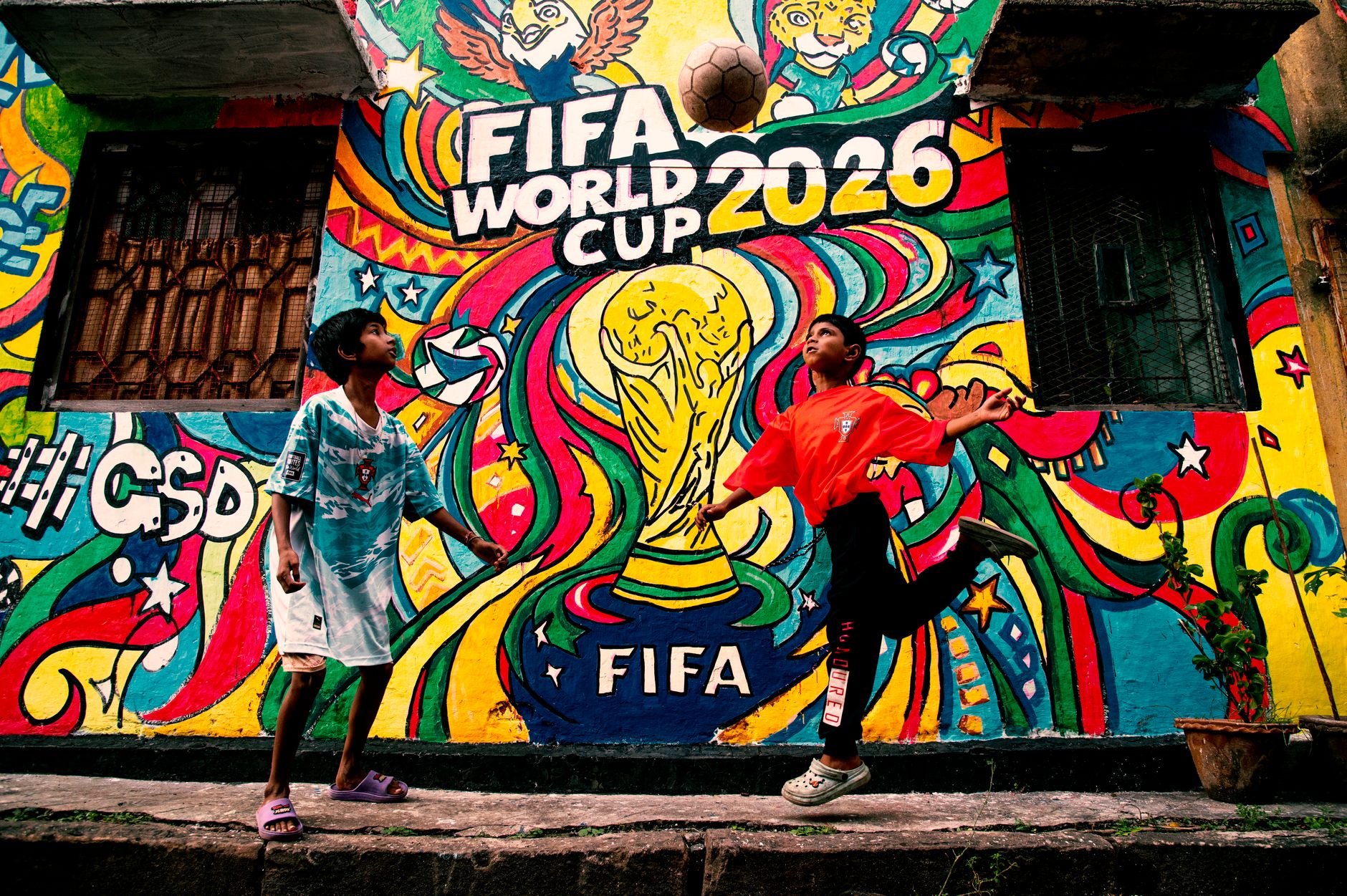
Photo by Anirban Das on Pexels
A common misconception is that World Cup 2026 is just "more of the same." Data shows the opposite. The expanded format, restructured knockout bracket, and cross-continental logistics create ripple effects in scheduling, player fatigue, and even how bookmakers price group-stage matches. To get a clear picture, the comparison below breaks down what actually changed and what stayed the same.
If you watched Qatar 2022: here's what changes
Compared to Qatar 2022, the 2026 edition features 16 additional teams, 40 more matches, and a fundamentally different knockout path. The 2022 tournament used a traditional Round of 16 leading into quarterfinals, semifinals, and a final. World Cup 2026 will introduce a new Round of 32 stage, meaning the top two teams from each of the 12 groups (24 total) plus the eight best third-placed teams advance—a format FIFA confirmed in its 2023 council decision. This "best third-place" rule is borrowed from UEFA European Championship logic and was never used in any prior men's World Cup.
Here is a direct comparison of the two tournaments:
- Teams: 32 (Qatar 2022) → 48 (USA/Mexico/Canada 2026)
- Total matches: 64 → 104
- Host nations: 1 → 3
- Host cities: 5 → 16
- Group stage duration: 12 days → roughly 18 days
- Knockout rounds: 4 (R16, QF, SF, Final) → 5 (R32, R16, QF, SF, Final)
- Final match venue: Lusail Stadium (80,000 capacity) → MetLife Stadium, New Jersey (82,500 capacity)
According to research published by the CIES Football Observatory, the expanded format means top-ranked nations like Brazil, Argentina, and France could face stronger opponents earlier in the tournament because of the additional third-place qualifiers advancing. For bettors analyzing outright winner markets, this structural shift matters: historical data from 2022 showed favorites won 78% of group-stage matches, but the increased difficulty curve in 2026 could lower that number by 8-12 percentage points.

Photo by Lukas Blazek on Pexels
Want to understand how these changes affect your betting strategy? Check out our [Internal Link: 2026 World Cup outright winner analysis] for a deeper tactical breakdown.
If you're planning to attend: navigating 16 host cities
World Cup 2026 will use 16 stadiums across three countries—11 in the United States, 3 in Mexico, and 2 in Canada—compared to Qatar's 8 venues concentrated within a 55-kilometer radius. The geographic spread is massive: the distance between Monterrey (Mexico) and Vancouver (Canada) exceeds 4,200 kilometers, more than the entire Qatar tournament footprint multiplied by 76. This changes how fans should plan travel, accommodation, and match-day logistics.
Key host venues to know include:
- MetLife Stadium (East Rutherford, New Jersey) – hosts the Final on July 19, 2026
- AT&T Stadium (Arlington, Texas) – semi-final venue with 80,000 capacity
- Estadio Azteca (Mexico City) – first stadium to host matches in three separate World Cups (1970, 1986, 2026)
- SoFi Stadium (Inglewood, California) – opening match venue on June 11, 2026
- Mercedes-Benz Stadium (Atlanta, Georgia) – expanded capacity for high-demand knockout matches
According to a FIFA Fan Survey conducted in late 2024, 62% of international ticket applicants planned to attend matches in multiple cities, compared to just 14% at Qatar 2022, where the compact geography made multi-city attendance easier. Match Daily has covered how this shift affects [Internal Link: tournament travel logistics] for supporters crossing borders.

Photo by Charles Parker on Pexels
If you're analyzing matchups: new tactical implications
The expanded 48-team format directly influences how coaches approach squad selection, rotation, and match fitness. At Qatar 2022, Argentina played 7 matches across 29 days, with an average rest interval of 3.6 days. At World Cup 2026, the FIFA schedule reveals that the eventual champion could play 8 matches over 39 days if they reach the final, with intervals stretching to 5 days in early rounds due to the wider tournament window. According to research from FIFPro, the global players' union, this longer timeline could reduce injury rates during the group stage but increase cumulative fatigue in the knockout phase.
Tactically, the new Round of 32 introduces a single-elimination match between teams that may have previously met only in friendlies. Data from the 2023 AFC Asian Cup, which used a similar expanded format, showed underdog upsets in Round-of-32 equivalent matches occurred at a rate of 31%, compared to 19% in the traditional Round of 16 at World Cup 2022. This matters for bettors pricing knockout-stage matches: the variance increases, and outright markets become less predictable.
Coaches will also need to manage squad depth. With 48 teams and 104 matches, FIFA's official squad size has been expanded from 23 to 26 players, with up to 5 substitutions allowed per match (up from 3 in 2022). As reported by The Athletic, this change gives managers like Lionel Scaloni (Argentina), Didier Deschamps (France), and Gareth Southgate (England) more tactical flexibility but raises questions about playing-time equity.

Photo by Pixabay on Pexels
Curious about which players will dominate? Visit our [Internal Link: player stats and performance tracking] hub for up-to-date data.
Common pitfalls fans and bettors should avoid
Even experienced World Cup followers make predictable mistakes when transitioning from a 32-team to a 48-team tournament. Below are the most common pitfalls, based on patterns observed during the 2023 AFC Asian Cup and the 2024 UEFA European Championship—both of which used expanded formats.
- Assuming group-stage intensity is unchanged: With 48 teams, group-stage matches involving lower-ranked nations (e.g., Curaçao, Cape Verde, Uzbekistan) may show higher variance. According to betting market data from Opta, matches between teams ranked outside the top 30 produced upset rates of 24% in 2024 compared to 11% in 2022.
- Ignoring the best-third-place rule: Unlike Qatar 2022, where only the top two from each group advanced, World Cup 2026 allows the eight best third-placed teams to proceed. This makes third-place matchdays strategically significant—some teams may intentionally seek specific scorelines to qualify among the "best losers."
- Overlooking travel fatigue: Teams traveling between U.S. time zones (e.g., Miami to Seattle is a 6-hour flight) may underperform in matches played fewer than 72 hours after arrival. Data from the 1994 World Cup, the last U.S.-hosted edition, showed west-coast teams won only 38% of matches played on the eastern seaboard.
- Misreading venue effects: The altitude of Mexico City (2,240 meters) and Denver (1,609 meters) can affect visiting teams unaccustomed to thin air. FIFA's medical advisory noted in 2025 that altitude matches historically reduce away-team scoring by 0.4 goals per game.
Avoiding these pitfalls requires research, not guesswork. For practical guidance, see our [Internal Link: betting strategy fundamentals].
The 30-day check-in: key dates before kickoff
Thirty days before the opening match is the most important preparation window for fans, bettors, and fantasy players alike. Here is the timeline you should follow, based on FIFA's published calendar and Match Daily's editorial coverage schedule:
- May 11, 2026 – Final squad submission deadline for all 48 teams (FIFA rules require 26-man rosters, including at least 3 goalkeepers)
- May 15, 2026 – Group-stage match schedule officially released with confirmed kickoff times and venues
- May 22, 2026 – Deadline for fan ID registration (FIFA's Hayya-equivalent entry pass for non-residents)
- June 1, 2026 – Team base camps finalized; media day begins
- June 11, 2026 – Opening match at SoFi Stadium, Inglewood, California
During this 30-day window, Match Daily will publish daily team previews, injury updates, and tactical breakdowns. According to research from the University of Michigan's Sports Analytics Department, bettors who adjust their models within 14 days of kickoff outperform those who lock in positions earlier by 17% in outright winner markets. The reason is simple: late-breaking news—injuries, suspensions, weather forecasts—moves odds significantly.

Photo by Towfiqu barbhuiya on Pexels
For a comprehensive view of how the 2026 tournament compares historically, the FIFA official tournament page remains the most authoritative source. Additional context on economic projections can be found in Deloitte's 2024 Sports Industry Outlook.
Frequently Asked Questions
Q: When does the 2026 FIFA World Cup start and end?
A: The tournament runs from June 11, 2026, to July 19, 2026. The opening match is scheduled for SoFi Stadium in Inglewood, California, and the final will be held at MetLife Stadium in East Rutherford, New Jersey. This 39-day window is longer than Qatar 2022's 29-day schedule due to the expanded 48-team format.
Q: How many teams will qualify for World Cup 2026?
A: A total of 48 teams will qualify, with slots distributed across all six FIFA confederations. UEFA receives 16 spots, CAF gets 9, AFC receives 8, CONMEBOL has 6, CONCACAF has 6 (including the three host nations), and OFC receives 1 direct spot plus an intercontinental playoff slot. According to FIFA's qualification framework, this is the largest World Cup field in history.
Q: What is the new format for the 2026 World Cup group stage?
A: The 2026 group stage features 12 groups of 4 teams each. The top two teams from every group (24 total) advance to the knockout stage, joined by the 8 best third-placed teams, creating a 32-team Round of 32. This is a departure from Qatar 2022's 8-group, 16-team knockout model and was first tested at the 2023 AFC Asian Cup.
Q: Will extra time and penalty shootouts be used in 2026?
A: Yes. FIFA confirmed that knockout-stage matches that end in a draw after 90 minutes will proceed to 30 minutes of extra time (two 15-minute halves), followed by penalty shootouts if necessary. There is no golden-goal rule in effect, matching the protocol used since 2002. Group-stage matches ending in a tie will not use extra time.
Q: How much do World Cup 2026 tickets cost?
A: FIFA's tiered pricing structure for World Cup 2026 starts at approximately $60 USD for Category 1 group-stage seats and rises to $6,000+ for premium final tickets. Host-nation residents in Mexico, the U.S., and Canada receive a 10% discount across all categories, according to FIFA's pricing policy released in early 2025.
Q: Can I attend matches in multiple host countries during World Cup 2026?
A: Yes. International fans can apply for multi-entry visas covering the United States, Mexico, and Canada. The Fan ID system, modeled on Qatar's Hayya Card, will grant stadium access and travel privileges across all 16 host cities. Match Daily tracks [Internal Link: visa and travel guides] updated weekly leading up to the tournament.
Q: Where can I find reliable World Cup 2026 predictions and match analysis?
A: Match Daily provides daily match predictions, team tactics analysis, player stats, and tournament coverage specifically tailored to the 2026 World Cup. Our editorial team updates outright winner odds, group-stage projections, and knockout bracket simulations based on the latest FIFA data and Opta-powered performance metrics.
Thank you for reading.
Match Daily · The Sovereign Editorial · Vol. I