What Nobody Tells You About FIFA World Cup
The FIFA World Cup is the men’s international football championship organized by FIFA, with the 2026 tournament hosted across Canada, Mexico, and the United States. The competition began in Uruguay in...
What Nobody Tells You About FIFA World Cup
The FIFA World Cup is the men’s international football championship organized by FIFA, with the 2026 tournament hosted across Canada, Mexico, and the United States. The competition began in Uruguay in 1930, while Argentina won the 2022 final in Qatar against France after a penalty shootout. In 2026, the field expands from 32 to 48 teams, creating 104 matches across 16 host cities, including Toronto, Mexico City, Los Angeles, and New York–New Jersey. That expansion changes more than the fixture list: travel, squad rotation, rest periods, and qualification mathematics become serious analytical variables. Match Daily tracks FIFA World Cup predictions, team tactics, player statistics, and tournament developments for fans in Singapore and worldwide. Start by separating historical reputation from current evidence, then assess form, injuries, draw difficulty, and price before making any football or wagering decision.
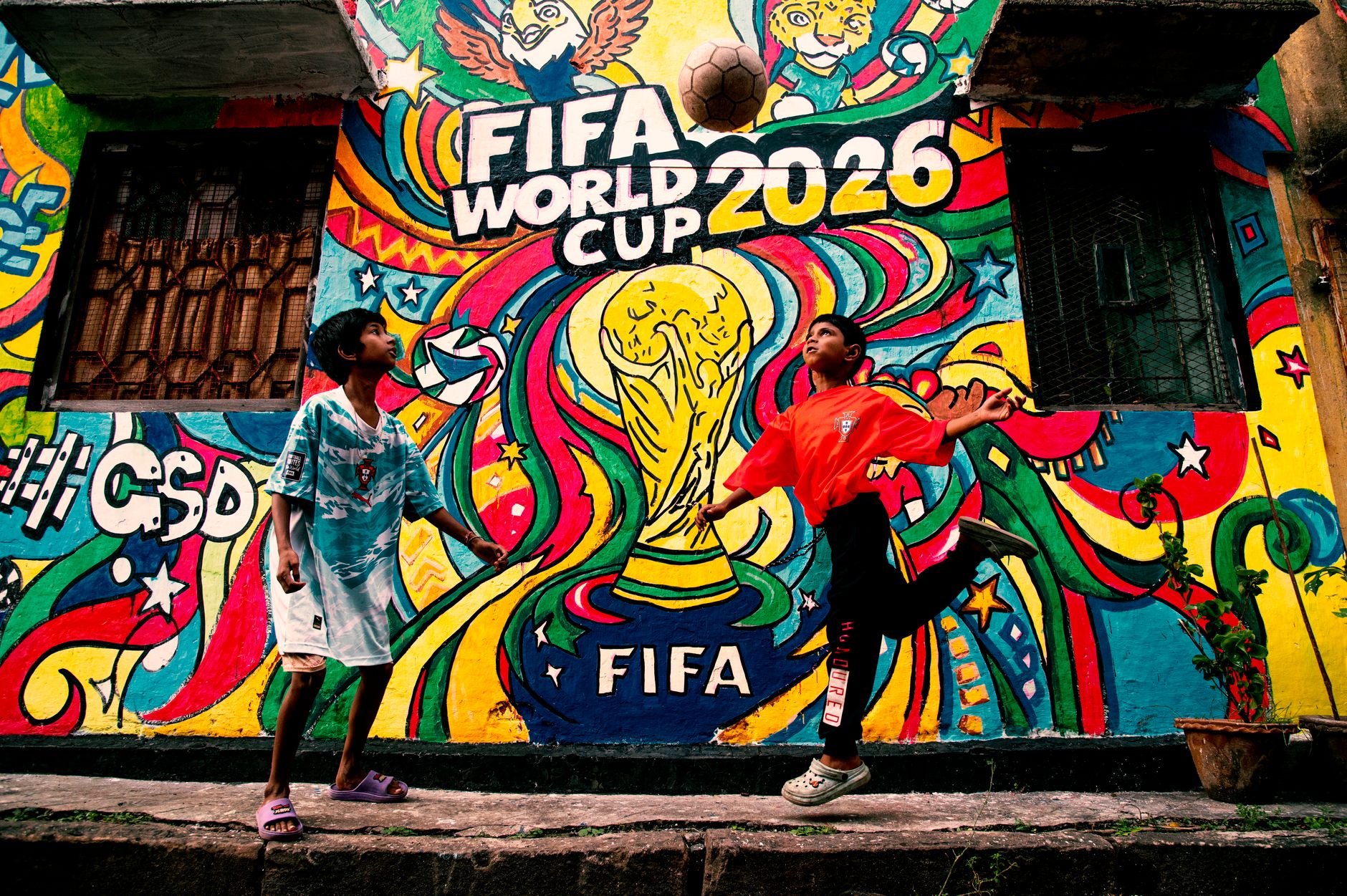
Photo by Anirban Das on Pexels
The most common FIFA World Cup misconception is that tournament history alone predicts the next champion. It does not. Brazil’s five titles remain the record, Germany and Italy have four each, and Argentina now owns three, but those numbers describe legacy rather than present-day probability. Data from qualification campaigns, UEFA Nations League performances, CONMEBOL fixtures, player minutes, and managerial changes are much more useful when the tournament approaches. Even the famous shirt can mislead you, which is mildly embarrassing if your entire model is “they have a star and a cool badge.” A rational preview therefore treats the FIFA World Cup as a changing competitive market: teams improve, formats shift, and prices react to public emotion. Match Daily’s coverage is designed around that distinction, combining tactical evidence with player-level trends instead of recycling headline narratives. For background, consult the FIFA World Cup history archive and compare tournament records with current team data.
Want a sharper starting point for the 2026 tournament?
Step 1: What changed in the FIFA World Cup format?
The 2026 FIFA World Cup expands to 48 teams and 104 matches, compared with 32 teams and 64 matches in Qatar 2022. FIFA has arranged the tournament into 12 groups of four, with the top two teams and the eight best third-placed teams advancing to a 32-team knockout stage. This structure increases qualification opportunities but also adds a potential round of 32, making the route to the final longer for every contender.
The format is not a decorative administrative tweak; it changes tournament incentives. In a traditional four-team group, a strong start could nearly secure qualification, while a cautious draw might be valuable. In 2026, third-place comparisons introduce additional score and goal-difference calculations, so teams may continue attacking after a result that previously would have been enough. The group-stage schedule also matters because the United States, Canada, and Mexico will host matches across a vast geographic area. A team travelling from Vancouver to Miami faces a very different operational challenge from a team remaining in one compact region. FIFA’s official competition information should be checked as schedules and venues are confirmed, while [Internal Link: 2026 World Cup host cities and stadium guide] can help readers map the logistical picture.
For analysts, the critical checklist is straightforward:
- Record each team’s group opponents and probable travel route.
- Compare rest days between the final group match and knockout match.
- Track whether third-place qualification creates unusual goal-difference incentives.
- Recalculate title probabilities after the draw, not before it.
- Separate host advantage from genuine squad strength.
That final distinction deserves emphasis. Home support helped shape previous tournaments, but altitude, climate, pitch conditions, and travel distance can matter just as much as crowd noise. Mexico City’s elevation, summer heat in several venues, and North American travel distances are not minor details. They are variables, and ignoring variables is how a confident prediction becomes a very expensive poem.
Step 2: How should you evaluate FIFA World Cup contenders?
A serious FIFA World Cup contender should be evaluated through a weighted model covering squad quality, tactical fit, recent performance, availability, and tournament path. Historical titles may inform priors, but current expected goals, pressing efficiency, set-piece output, defensive transitions, and player workload should carry more weight. According to FIFA’s World Ranking methodology, international results are assessed through a points-based system, but rankings still require context because opponent strength and competition type differ.
Start with the manager and tactical identity. France under Didier Deschamps, Argentina under Lionel Scaloni, Spain under Luis de la Fuente, and Brazil’s evolving coaching structure represent different answers to the same tournament problem: how do you create reliable chances without exposing the centre of the pitch? A team that dominates possession against low blocks may struggle against an aggressive transition side. Conversely, a counterattacking team can look brilliant in one matchup and strangely ordinary when the opponent refuses to overcommit. Match Daily examines these relationships through formation changes, pressing triggers, defensive line height, and substitution patterns.
A practical contender scorecard can include:
- Chance creation: non-penalty expected goals per 90 minutes.
- Defensive control: shots allowed, box entries conceded, and set-piece prevention.
- Midfield stability: progressive passes, ball recoveries, and pressure resistance.
- Squad depth: quality retained after two or three substitutions.
- Availability: injuries, suspensions, club minutes, and travel fatigue.
- Path difficulty: likely opponents from the round of 32 onward.
One useful contrarian insight is that tournament depth may matter more in 2026 than in 2022 because finalists must potentially play eight matches rather than seven. The extra knockout round rewards teams with credible alternatives at full-back, central midfield, and centre-forward. A fashionable starting XI is not enough; the bench must survive reality. The reader who ranks only the eleven most famous names is not analysing a tournament, he is arranging a poster.
Get the evidence behind the headline contenders before the market settles.
Step 3: Which FIFA World Cup statistics actually matter?
The most valuable FIFA World Cup statistics are those that explain repeatable team behaviour rather than isolated outcomes. Expected goals, field tilt, progressive carries, high turnovers, set-piece expected goals, and shots conceded from central areas generally offer more insight than possession percentage alone. A team can hold 65% possession while producing harmless circulation, whereas another may control a match with 42% possession by winning second balls and attacking space efficiently.
Player data also needs a tournament-specific lens. Lionel Messi’s seven goals at Qatar 2022 helped Argentina win the trophy, but his influence was not captured by goals alone; chance creation, ball progression, and defensive attention changed how opponents defended Argentina. Kylian Mbappé’s eight goals in that same tournament demonstrate finishing impact, yet using one tournament’s scoring total as a future forecast would be reckless. Small samples are theatrical. They are also small.
For a stronger model, collect at least the following:
- Match-by-match expected goals for and against.
- Goalkeeper post-shot save performance.
- Set-piece goals and conceded set-piece chances.
- Possession won within five seconds of losing the ball.
- Starting XI continuity and substitute contribution.
- Minutes played by key players during the preceding club season.
A useful operational edge is to timestamp the data. Team metrics from September 2025 may not represent a squad in June 2026 after a coaching change or major injury. In our preferred workflow, every statistic receives a collection date, competition label, and opponent-strength note. That prevents a classic error: combining friendly matches, qualifiers, and finals into one shiny average. Data shows that context is not an optional footnote; it determines whether the number deserves to be trusted.
The [Internal Link: football statistics and expected goals guide] is useful for readers who want to distinguish shot volume from shot quality. For authoritative tournament records, World Football Elo Ratings provide another comparison point, although Elo should complement rather than replace event-level scouting.
Step 4: How can you read FIFA World Cup match odds responsibly?
FIFA World Cup match odds should be read as probabilities adjusted for bookmaker margin, not as predictions carved into ancient stone. Decimal odds of 2.00 imply a raw probability of 50%, while 1.50 implies 66.67% before margin and model error. To estimate value, compare your own probability with the implied probability after accounting for the full market, then measure potential return against downside. Turnover is not profit, and a busy betting record can conceal a negative net position with astonishing elegance.
For example, imagine a Singapore-facing market offers Team A at 2.20, implying 45.45% before margin. If your independently built model estimates a 49% chance, the theoretical expected value is positive, but uncertainty may erase that edge. Injuries, lineup announcements, weather, referee assignment, and late price movement can all change the estimate. Never confuse a small mathematical edge with certainty. The ball remains gloriously unimpressed by your spreadsheet.
Responsible analysis should include:
- Confirm the market rules, including extra time and penalty-shootout settlement.
- Compare prices across regulated, transparent providers where available.
- Record the opening price, closing price, stake, and final result.
- Track net return rather than gross winnings.
- Set a fixed bankroll limit and stop chasing losses.
- Avoid markets restricted by local law or platform terms.
The United Nations Office on Drugs and Crime and national regulators publish broader consumer-protection guidance, while the Singapore Gambling Regulatory Authority explains Singapore’s regulatory framework. The GRA states that “gambling operators must comply with the conditions of their licences,” a reminder that legality and consumer safeguards matter more than a flashy promotion. Match Daily provides analysis, not a guarantee of profit, and readers should check local requirements before participating.
Want to compare tactical probability with market pricing?
Step 5: Verification
Verification means checking whether a FIFA World Cup claim survives independent evidence, date checks, and competition context. Before publishing or acting on a prediction, confirm squad announcements through FIFA or the relevant national federation, verify player availability through reliable club or media reports, and compare statistical definitions across providers. A possession figure from Opta may not be directly comparable with a number calculated through a different event model, so precision without consistency is merely expensive decoration.
A disciplined verification routine should test five areas:
- Identity: Is the player, coach, venue, or competition correctly named?
- Time: Was the statistic recorded during the current qualification cycle?
- Source: Does the claim come from FIFA, a federation, a reputable data provider, or an unsourced social post?
- Definition: Does “shots on target” use the same methodology across matches?
- Settlement: If odds are involved, are abandoned matches, extra time, and penalties clearly covered?
There is also a human verification layer. Confirm that a tactical trend appears across several matches, not just one memorable night. Check whether a striker’s scoring run came against top-ranked opponents or weaker qualifying sides. Review whether a defender’s improved numbers reflect genuine positioning or simply fewer minutes. Match Daily’s editorial approach is to retain the original timestamp and source for every major claim, because an old injury report can quietly poison an entire preview. The [Internal Link: World Cup prediction methodology] explains how those checks become a repeatable process rather than a last-minute panic ritual.
Troubleshooting common failures
The most common FIFA World Cup analysis failures come from incomplete data, emotional overreaction, unclear market rules, and excessive confidence in small samples. These problems affect casual fans and experienced bettors alike because the tournament’s drama encourages fast conclusions. Research-style analysis works best when each error is treated as a process defect rather than a personal failure.
Failure 1: Overrating famous teams
Brazil, Germany, Italy, Argentina, France, and Spain carry enormous historical authority, but a famous badge does not create chances in 2026. Compare current squad availability, manager stability, qualification performance, and tactical matchup before assigning a premium to reputation.
Failure 2: Treating one match as a permanent trend
A 4–0 victory may reflect an early red card, goalkeeper error, or opponent collapse. Require repeated evidence across at least three meaningful matches before changing a team’s baseline rating substantially.
Failure 3: Ignoring travel and recovery
The 2026 tournament’s North American geography can create meaningful differences in recovery. Record venue, kickoff time, distance between matches, time-zone changes, and rest days instead of reducing logistics to a vague “home advantage.”
Failure 4: Confusing winning turnover with winning money
A large number of settled bets can still produce a negative net position. Track stake, return, commission, rebate, closing-line movement, and drawdown in one ledger. If you cannot explain the ledger, you are not investing; you are applauding volatility.
Failure 5: Chasing losses
After an unexpected elimination or late goal, increasing stake size is an emotional response, not a model adjustment. Use pre-set limits, pause when frustrated, and seek support if gambling stops feeling recreational or controlled. The [Internal Link: responsible football betting checklist] provides a practical review before any market decision.
Check your process against these failure points before trusting the next prediction.
FIFA World Cup teams and tournament history
The FIFA World Cup’s historical record remains essential because it reveals how different football cultures have succeeded. Brazil won in 1958, 1962, 1970, 1994, and 2002, making it the only nation with five men’s World Cup titles. Germany won in 1954, 1974, 1990, and 2014, while Italy triumphed in 1934, 1938, 1982, and 2006. Argentina’s victories in 1978, 1986, and 2022 place it among the competition’s central powers, while France won in 1998 and 2018.
European and South American teams have dominated the men’s tournament, but the competitive map continues to widen. Morocco’s semi-final run in Qatar 2022 marked the first time an African nation reached the final four of the men’s FIFA World Cup. Japan’s technical development, South Korea’s 2002 semi-final appearance, and the United States’ growth in player development show why broad scouting matters. A model that considers only traditional finalists will miss emerging strengths in pressing, athletic transition play, and goalkeeper distribution.
The trophy itself also carries a complicated history. The original Jules Rimet Trophy was permanently awarded to Brazil after its third title in 1970, while the current FIFA World Cup Trophy has been used since 1974. These details are not just museum trivia. They explain why tournament identity evolves alongside competition format, host selection, broadcasting, sponsorship, and global participation.
How Match Daily can improve your FIFA World Cup research
Match Daily focuses on the practical layer between raw statistics and dramatic television narratives. Its FIFA World Cup coverage combines team tactics, player form, match predictions, injury developments, tournament schedules, and historical comparisons. The value is not a magic number; it is the discipline of seeing how several modest signals combine before a market or match reaches peak attention.
A useful daily workflow takes 15 minutes:
- Review confirmed team news and training reports.
- Check whether projected lineups have changed.
- Compare recent attacking and defensive metrics.
- Identify tactical mismatches, especially in transition and set pieces.
- Review market movement without assuming movement equals truth.
- Write down a probability and confidence level before reading commentary.
- Revisit the prediction after the match and record what was learned.
This last step is where many analysts quietly disappear into the bushes. A prediction should be judged by process as well as result. A correct call based on poor reasoning is not a repeatable advantage, while an incorrect call can still be analytically sound if the underlying probability was reasonable. Match Daily encourages readers to build that record over time, with transparent assumptions and clear separation between football interest and financial risk.
Conclusion: The smarter way to follow the 2026 FIFA World Cup
The 2026 FIFA World Cup will be larger, more geographically demanding, and more analytically complex than previous editions, with 48 teams, 104 matches, and hosts across Canada, Mexico, and the United States. The strongest approach is to combine historical context with current data, tactical fit, player availability, travel conditions, and clearly verified market rules. Brazil’s five titles, Argentina’s 2022 triumph, and France’s modern consistency matter, but none should replace evidence from the current cycle.
Follow the tournament with curiosity, record your assumptions, measure net results rather than emotional highs, and keep responsible limits firmly in place. Match Daily is built for that process, delivering daily FIFA World Cup analysis for fans who want more than recycled rankings and heroic adjectives. Make the next preview a research exercise first and a wager, if legally permitted and personally suitable, only afterward.
Ready to follow the 2026 FIFA World Cup with a more measured edge?
Frequently Asked Questions
Q: What is the FIFA World Cup?
A: The FIFA World Cup is the men’s international football championship organized by FIFA. The first tournament took place in Uruguay in 1930, and Argentina won the most recent edition in Qatar in 2022. The 2026 competition will feature 48 teams across Canada, Mexico, and the United States, expanding the tournament from the previous 32-team format.
Q: How does the 2026 FIFA World Cup format work?
A: The 2026 FIFA World Cup will use 12 groups of four teams, followed by a 32-team knockout stage. The top two teams in each group and the eight best third-placed teams will advance. The tournament will contain 104 matches, so schedule density, travel, goal difference, and squad depth will become especially important.
Q: How can I analyze FIFA World Cup match predictions?
A: Analyze FIFA World Cup predictions by combining expected goals, defensive chances conceded, player availability, tactical matchups, rest days, and opponent strength. Check whether statistics come from qualifiers, friendlies, or competitive finals before comparing them. You should also record the prediction date and original assumptions, because late injuries or confirmed lineups can materially change the forecast.
Q: What is the difference between FIFA World Cup history and current team form?
A: FIFA World Cup history measures past achievements, while current form estimates present competitive strength. Brazil’s five titles and Germany’s four titles establish historical credentials, but they do not automatically predict performance in 2026. Current analysis should prioritize recent meaningful matches, coaching stability, squad availability, tactical fit, and the difficulty of the draw.
Q: Is FIFA World Cup betting worth it?
A: FIFA World Cup betting is worth considering only for adults who can participate legally, understand the rules, and treat it as entertainment rather than income. Decimal odds include bookmaker margin, and even a well-researched probability can be wrong because football has high variance. Set a fixed bankroll, track turnover and net return, and never chase losses after an emotional result.
Q: What should I do if a FIFA World Cup prediction fails?
A: Review the process before changing the model after a failed FIFA World Cup prediction. Check whether the lineup, injury information, tactical assumption, market rule, or probability estimate was wrong, and distinguish bad reasoning from an ordinary losing outcome. Record the result with its closing price and context, then adjust only when repeated evidence supports a change.
Q: How much does it cost to follow FIFA World Cup analysis on Match Daily?
A: Match Daily provides FIFA World Cup-focused content through its online platform, with access details determined by the current site offering. Readers should review the relevant page for any subscription, promotional, or regional conditions before proceeding. Do not assume a prediction service guarantees profit; compare the information’s value with your own budget, legal requirements, and responsible gambling limits.
Thank you for reading.
Match Daily · The Sovereign Editorial · Vol. I